
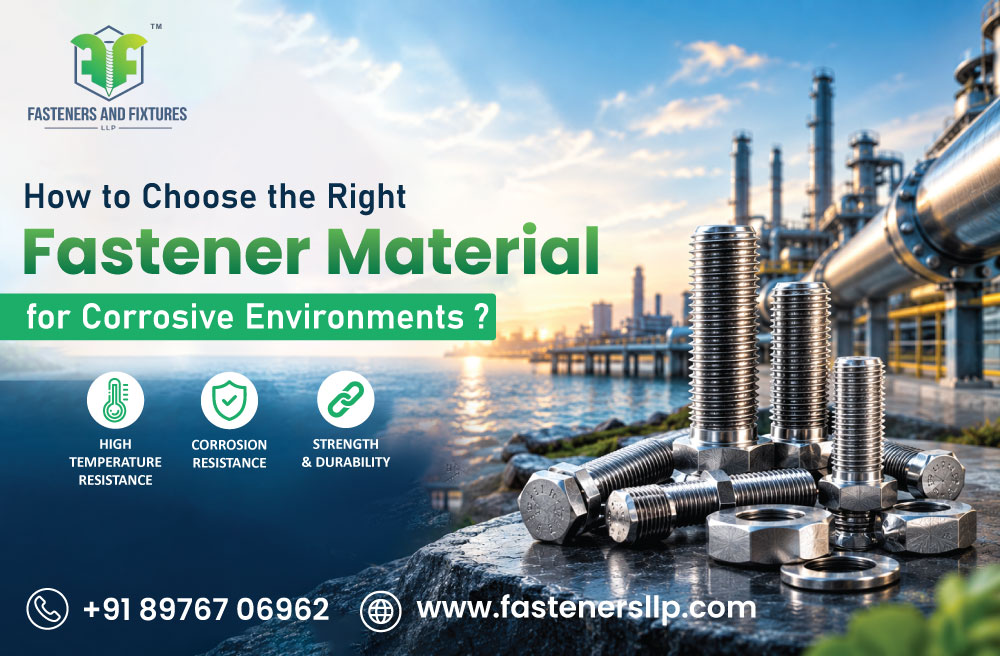
In the case of industries operating in environments that are exposed to extreme temperatures and pressure, chemical seawater, as well as other substances that can be corrosive, conventional fasteners might not be durable enough. This is the reason Inconel 625 screws are a crucial engineering solution. Manufactured from a nickel-chromium-molybdenum alloy, these fasteners combine excellent corrosion resistance, high strength, and good performance across demanding operating conditions.
For industries looking for durable, corrosion-resistant materials, Inconel 625 is especially useful in chemical processing, marine, aerospace, power and oil generation, and many other crucial applications. Fasteners & Fixtures LLP has fastener solutions that are designed for use in areas where performance and reliability are vital.
What Are Inconel 625 Fasteners?
Inconel 625 fasteners are fastening or threaded components made using Inconel 625, a superalloy made of nickel comprising chromium and nickel as well as molybdenum, niobium, as well as other alloying elements.
Common products are:
- Inconel 625 bolts
- Inconel 625 nuts
- Inconel 625 screws
- Inconel 625 washers
- Inconel 625 studs
- Inconel 625 rods with threaded ends
The alloy is renowned for its strength and resistance to corrosion in areas where conventional carbon steel or stainless steel fasteners might have a difficult time.
Why Choose Inconel 625 for Corrosive Environments?
The most important reason for choosing Inconel 625 is its resistance to a broad range of corrosive environments. Its chromium content is a major contributor to resistance to oxidation, whereas molybdenum and niobium increase the resistance to localized corrosion as well as hostile environments.
In this way, Inconel 625 can be considered one of the top-performing corrosion-resistant materials employed in industrial applications.
It is a means of resistance against:
- Crevice corrosion and pitting
- Chloride-ion attack
- Oxidation
- Seawater corrosion
- Stress-corrosion cracking
- Certain chemicals and acids
This is what makes Inconel 625 particularly suitable where fasteners are in contact with corrosive materials or are operating in extreme chemical and atmospheric conditions.
Who Uses Inconel 625 Fasteners?
Inconel 625 fasteners can be used in industries where mechanical strength and corrosion resistance are crucial.
Aerospace Industry
Aircraft engines as well as airframe components, exhaust systems, and many other aerospace components are subject to high temperatures and harsh operating conditions. Inconel 625 offers a blend of durability and resistance to corrosion appropriate for such conditions.
Chemical Processing
Chemical plants utilize specific chemicals as fasteners for equipment that is exposed to chemicals that are aggressive. Inconel 625 may be used for piping systems, vessels, as well as heat exchangers and other equipment where resistance to corrosion is essential.
Marine Industry
Seawater is full of chlorides, which increase the rate of corrosion. Inconel 625’s superior resistance to seawater makes it ideal for marine structures, offshore equipment, as well as subsea-based applications. Elements of engineering for marine use.
Oil & Gas
Oil and gas equipment may be subject to high temperatures and pressures, hydrogen sulfide and chlorides, as well as other abrasive conditions. Inconel 625 fasteners can be employed when resistance to mechanical and corrosion is needed.
Power Generation
Power plants, which include ones that are exposed to extreme temperatures and chemically hazardous environments, may use fasteners made of nickel alloy for crucial connections.
What Are the Key Properties of Inconel 625?
The most important characteristics of Inconel 625 that make Inconel 625 fasteners useful include:
High Corrosion Resistance: Inconel 625 is extremely resistant to different types of corrosion, making it suitable for environments with high levels of stress.
High Strength:
The alloy has excellent mechanical performance, without precipitation hardening.
Temperature Resistance:
It has beneficial mechanical properties over the entire temperature range and is well-suited for high-temperature applications.
Resistance to Chlorides:
Its composition offers a high degree of resistance to chloride-induced pitting as well as crevice corrosion.
Good Fatigue Strength:
Inconel 625 is able to endure repeated mechanical loads and is suitable for demanding engineering.
Excellent Weldability:
As compared to many superalloys based on nickel, Inconel 625 offers good weldability.
When Should You Use Inconel 625 Fasteners?
Inconel 625 fasteners are to be considered if the operational environment is a combination of at least one of the following
- High temperatures
- Extreme corrosion
- Chloride exposure
- Seawater
- Chemical exposure
- High mechanical loads
- Long-term service-life requirements
The use of a high-performance metal can aid in reducing premature failure of fasteners and also maintenance demands.
But, when selecting a material, always be based on the precise operational temperature, the composition and chemical content, load circumstances, compatibility with galvanic corrosion, and any required mechanical properties.
Where Are Inconel 625 Fasteners Applied?
The most common applications are:
- Heat exchangers
- Processing equipment for chemicals
- Marine engineering systems
- Offshore equipment for gas and oil
- Aerospace components
- Power-generation equipment
- Pressure vessels
- Valve assemblies and pipe fittings
- Pollution control equipment
- Subsea engineering systems
These examples show the reason why nickel-based alloys are typically chosen when other materials that resist corrosion aren’t able to provide the required performance.
Which Standards Apply to Inconel 625 Fasteners?
Inconel 625 fasteners are produced and delivered in accordance with the applicable ASTM, ASME, SAE, and other relevant specifications, based on the item dimensions, manufacturing procedure, and use.
Common material specifications associated with Inconel 625 include ASTM B446 for nickel-chromium-molybdenum-columbium alloy (UNS N06625) bars, rods, and forgings, while other standards may apply to specific product forms.
Fastener specifications can also be based on testing, dimensional, mechanical, and certification specifications. Therefore, buyers must provide the specified standard and grade/UNS designation, the dimensions and thread forms, as well as the finishing, testing, and required documentation prior to placing an order.
How Do Inconel 625 Fasteners Benefit Industries?
1. Extended Service Life
Their resistance to corrosion may aid in keeping fasteners operational for longer in harsh environments.
2. Reduced Maintenance
More resistance to degradation and corrosion could decrease the need for maintenance and replacement.
3. Reliable Performance
The strength of the material combined with its resistance to corrosion makes Inconel 625 suitable for critical fastening requirements.
4. Versatility
The alloy is used in marine, aerospace chemicals as well as oil and gas, and power generation.
5. Protection Against Harsh Environments
Inconel 625 is especially useful for fasteners that are exposed to water, chemicals, high temperatures, or any other substances that can cause corrosive damage.
Inconel 625 vs Conventional Fasteners:
Carbon-steel fasteners are affordable and can be used in a wide range of general-purpose applications. However, they might need protective coatings or protection against corrosion in extremely harsh environments. Steel has great corrosion resistance in a variety of applications; however, severe chemical and temperature conditions may require a more specialized nickel alloy.
Inconel 625 is therefore the best option for durability, environmental resistance, and dependability justifies the higher price.
Fasteners made of Inconel 625 are specifically designed for use in which corrosion resistance and strength are more crucial than making sure that the initial cost is minimal. They are resistant to environments containing chloride, saltwater, oxidation, as well as several chemically aggressive conditions, making them very useful Chemical fasteners and industrial fastening elements.
For applications that require the use of corrosive materials as well as high temperatures, pressure, and extreme operating conditions, selecting the correct alloy for your fastener is vital. Fasteners & Fixtures LLP will assist companies in finding the most suitable Inconel 625 fastener solutions based on the specifications, requirements for applications, as well as industry standards.
- What can Inconel 625 fasteners be employed to do?
Inconel 625 fasteners can be found in marine, aerospace, chemical processing, as well as oil and gas heat exchangers, power production pressure vessels, and other applications that require high resistance to corrosion as well as mechanical strength. - Are Inconel 625 fasteners corrosion resistant?
Yes. Inconel 625 offers excellent resistance to various corrosive environments, including seawater with chloride crevice corrosion, pitting, and oxidation processes. - Are Inconel fasteners appropriate for chemical use?
Yes. Inconel 625 is extensively used in chemical processing environments due to its resistance to various corrosive and aggressive chemical conditions. The particular chemical environment must be assessed prior to making a selection. - Which standards are utilized for Inconel 625 bolts?
According to the type of product and the intended use, Inconel 625 material is available as per ASTM, ASME, SAE, as well as other specifications that are applicable. ASTM B446 is the most frequently used specification for Inconel 625 bars, rods, and forging material. - What is the reason Inconel 625 bolts are more expensive than steel fasteners made to standard?
Inconel 625 is a high-quality nickel-based alloy that provides outstanding corrosion resistance, great durability, and performance in harsh environments. The more expensive raw material and manufacturing costs are the reason for the higher cost compared to standard steel fasteners.