
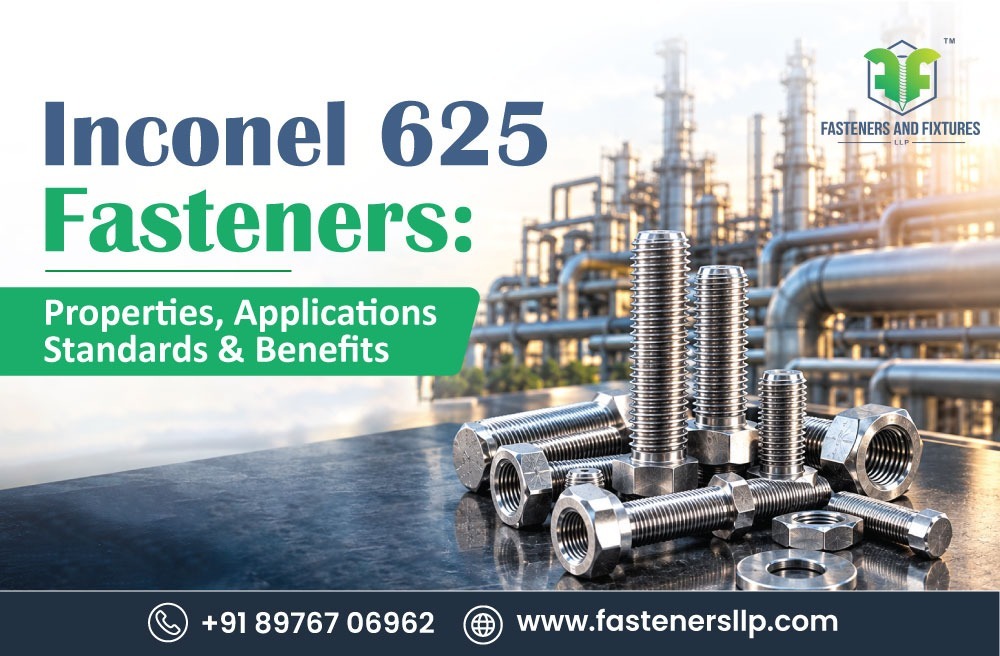
If industrial equipment is operating in extreme temperatures, pressure, corrosion, heat, and mechanical stress, choosing the appropriate fastening material is crucial. Inconel 625 fasteners are chosen for applications that require a lot of effort because they provide superior corrosion resistance, high strength, fatigue resistance, and reliability across a wide temperature range. For industries like chemical processing, aerospace, marine engineering, power generation, petroleum, and natural gas industries, Inconel 625 offers a solid solution in cases where traditional stainless steel fasteners might not be able to provide the required performance.
This guide will explain what Inconel 625 fasteners are, the reasons why they are utilized in the first place, where they can be utilized and who requires them, when they are appropriate, and the way their characteristics and specifications support the reliability of industrial processes.
What Are Inconel 625 Fasteners?
Inconel 625 fasteners include bolts, nuts, washers, screws, studs, and other threaded elements made from Inconel 625, a superalloy based on nickel that contains molybdenum, chromium, Niobium, and other alloying elements.
The combination of chromium and nickel gives it great resistance to corrosion and oxidation, as molybdenum and niobium provide strength and protection against corrosion that is localized. In contrast to many alloys that require a lengthy heat treatment to gain durability, Inconel 625 derives much of its strength from the alloy’s chemical composition.
This is what makes Inconel 625 fasteners suitable for applications where fasteners need to maintain the integrity of their structure even in harsh environments.
Why Choose Inconel 625?
The most important reason companies select Inconel 625 is its balance of mechanical strength and resistance to corrosion.
Important properties include:
- Great resistance to crevice and pitting corrosion
- Strong resistance to stress corrosion cracking caused by corrosion
- High tensile strength and fatigue strength
- Excellent resistance to Oxidation
- Excellent welding capabilities
- Resistance to many chemical environments
- Performance that is reliable even at high temperatures
- Excellent resistance to seawater and sea conditions
Another important aspect that buyers frequently look into is one of the most important specifications buyers often research: Inconel 625’s density. Its density is 8.44 grams per cubic centimeter (8440 kg/m3). This extremely high density is typical of nickel-based alloys and must be taken into account when calculating the weight of components, transport requirements, as well as the amount of material consumed.
Where Are Inconel 625 Fasteners Used?
Inconel 625 fasteners are utilized in areas where resistance to corrosion and mechanical properties matter more than minimising the cost of materials.
1. Aerospace Industry
Inconel 625 is employed in aerospace and aircraft components that are exposed to high temperatures, gases from exhaust, and environments that are corrosive. Fasteners made of the alloy can be utilized in engine-related assemblies as well as other aerospace applications.
2. Chemical Processing
Chemical processing equipment can come across acids, chlorides, or other chemicals that are aggressive. Inconel 625 fasteners are able to ensure secure connections in these conditions.
3. Marine Applications
Seawater can be extremely corrosive, especially where components have to be exposed to constant exposure. The alloy’s resistance to pitting, crevice corrosion, as well as chloride environments makes Inconel 625 fasteners useful for marine equipment as well as offshore installations.
4. Oil and Gas
Equipment for oil and gas can encounter high temperatures, high pressure fluctuations, hydrogen sulfide, chlorides, and corrosive fluids. Inconel 625 fasteners are employed in a variety of high-pressure downstream, upstream, and offshore applications.
5. Power Generation
The power plants need fastening equipment that is able to withstand temperatures as well as pressure and corrosive operating conditions. Inconel 625 is a good choice as a specialized fastener for heat exchangers, turbines, and similar equipment.
Who Should Use Inconel 625 Fasteners?
Procurement professionals, engineers, plant managers, OEMs, maintenance teams, and industrial producers should think about Inconel 625 fasteners when conventional fasteners made of stainless or carbon steel might not meet the requirements of strength and resistance to corrosion.
They are especially useful in situations where a failure of the fastener can cause equipment to shut down, leakage, safety issues, or even costly maintenance.
Selecting the best fastener for your needs must always be based on a thorough review of the operating temperatures, chemical exposure, mechanical load, and thread configuration, as well as the required strength and relevant specifications.
When Should You Choose Inconel 625?
Inconel 625 should be taken into consideration when components that are fastening can be exposed to
- High temperatures
- Chloride-rich or seawater environments
- Exposure to chemicals that can be severe
- High mechanical loads
- Loading from fatigue or cyclic
- Oxidizing environments
- The conditions in which corrosion-related maintenance has to be avoided
Yet, Inconel 625 is a premium nickel alloy, and it will cost more than stainless steel that is conventionally used. This is why it is suitable when its benefits in terms of performance outweigh the cost of additional materials.
How Are Inconel 625 Fasteners Manufactured and Specified?
Manufacturing usually involves processes like hot or cold working and machining, threading, shaping, and the right finishing. Since nickel alloys are extremely challenging to work with, producers require appropriate tooling as well as process control and inspection techniques.
According to the specific product’s use, buyers will meet specifications and standards that are associated with ASTM, ASME, SAE, and other requirements of the industry. Standard specifications for materials for Inconel 625 include ASTM B446/B446M for forgings and bars, and ASTM B443/B443M for plates, sheet, and strip, depending on the specific form of the product.
The requirements specific to fasteners may differ depending on whether the part is one of the following: bolt, stud screw, nut, or a different product. Therefore, buyers must confirm the exact dimensions, material, mechanical, testing, and certification requirements prior to making a decision to purchase.
Key Benefits of Inconel 625 Fasteners
The most important benefits are:
Outstanding corrosion resistance: Inconel 625 performs well in a variety of harsh environments.
High durability: The alloy has excellent mechanical performance, without relying on the precipitation process for hardening.
Excellent resistance to chlorides. It is especially beneficial when corrosion caused by chloride is a problem.
Ability to withstand temperature: It keeps beneficial mechanical and corrosion-resistant properties when temperatures are elevated.
Longer service life: Greater resistance to corrosion and degradation could reduce the need for replacement.
Flexibility: The alloy can be employed in marine, aerospace, chemical, energy, and other industries with specialized needs.
Why Fasteners and Fixtures LLP for Inconel 625 Fasteners?
For applications in the industrial sector that are critical, selecting the best grade is only a small part of the buying choice. Material traceability, dimensional accuracy, quality inspection, documentation, thread precision, and compliance with the standards are all equally important.
Fasteners and Fixtures, LLC can be a sourcer for those who require industrial fastening solutions, such as Inconel 625 fasteners. Buyers must provide their preferred dimensions, the type of fastener and quantity, as well as the application requirements, along with the material specifications and requirements for certification to ensure that the correct product is delivered.
Inconel 625 fasteners offer an efficient fastening solution for extreme environments where resistance to corrosion and toughness, fatigue performance, and high-temperature performance are vital. With the Inconel 625 density of 8.44 grams/cm3, the alloy is a strong nickel-based material specifically designed to withstand the harshest industrial conditions.
From chemical processing and aerospace to marine oil and gas and power generation, Inconel 625 can provide the durability required when other fastening products are not sufficient. The choice that is best for you will depend on the conditions of operation and engineering requirements, the applicable standards, as well as the total life-cycle cost.
If you have a specific requirement, working with an experienced supplier like Fasteners and Fixtures LLP can assist customers in identifying the right Inconel 625 fasteners for their use.
1. What is Inconel 625 Fasteners?
Inconel 625 fasteners include bolts and nuts, screws, washers, studs, and other components for fastening made using the nickel-based Inconel 625 alloy. They are renowned for their high durability and resistance to oxidation, corrosion, and chloride-based environments.
2. What is the density of Inconel 625?
It is estimated that the density of Inconel 625 is 8.44 grams per cubic centimeter, or around 8440 kg/m3. Density is a useful tool for calculating the weight of components and the material requirements.
3. Where can Inconel 625 fasteners be utilized?
They are typically chosen for the most demanding applications in marine engineering, aerospace, chemical processing, oil and gas, offshore equipment, energy generation, and many other high-temperature or corrosive areas.
4. Are Inconel 625 fasteners corrosion resistant?
Yes. Inconel 625 is extremely resistant to a variety of kinds of corrosion. This includes crevice corrosion, pitting, and chloride-related corrosion. This makes it ideal for harsh industrial environments.
5. What should I consider when choosing the correct Inconel 625 fasteners?
Be aware of the type of fastener, its dimensions, as well as operating temperature and temperature, chemical environment, thread load requirements, mechanical loads, as well as the applicable ASTM/ASME standards, requirements for testing, and the required certificates for materials. A qualified supplier can make sure that the specifications are compatible with the requirements of the application.