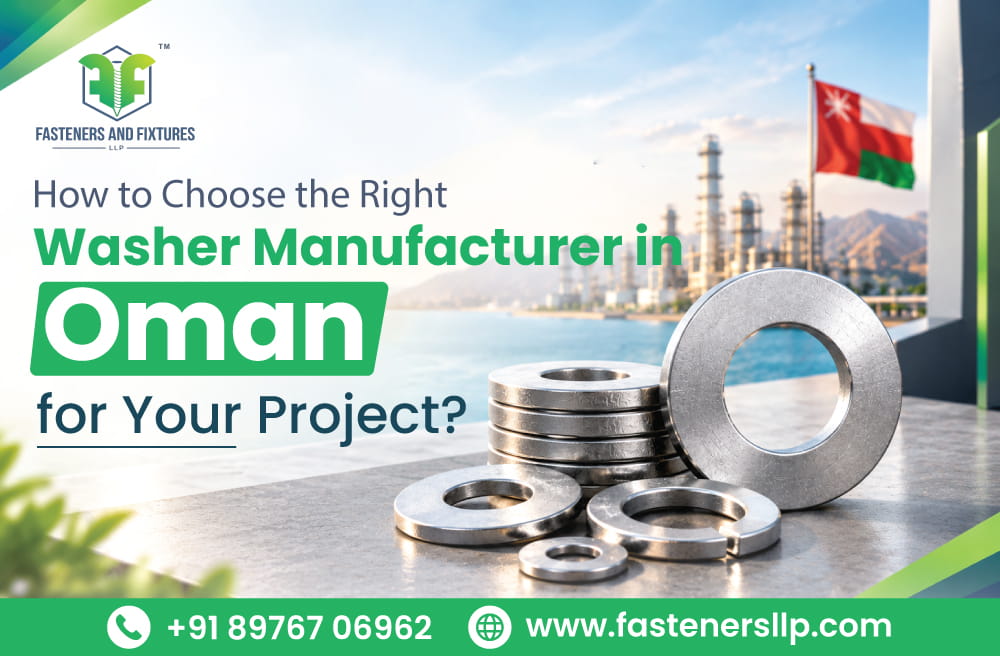
Choosing the right washer manufacturer in Oman is an important decision for construction, infrastructure, oil and gas, and industrial engineering projects. The right supplier helps businesses source reliable fastening components that support structural stability, operational safety, and long-term performance.
At Fasteners and Fixtures LLP, we understand that selecting washers involves much more than comparing prices. It requires careful consideration of material quality, technical specifications, application requirements, and supplier reliability.
In demanding industrial environments, even a small component can make a significant difference. A washer may appear simple, but its role in distributing loads, protecting mating surfaces, and supporting secure bolted connections makes it an essential part of many engineering applications.
So, how can project managers, procurement professionals, and engineers identify the right washer manufacturer in Oman? Let us explore the factors that matter most.
Understand Your Project’s Washer Requirements
Before approaching a washer manufacturer in Oman, businesses should clearly understand their project requirements. Different applications demand different washer designs, materials, dimensions, and mechanical properties.
For example, construction projects may require washers for structural bolting, while oil and gas facilities may need components suitable for challenging operating environments. Manufacturing plants, marine installations, and infrastructure projects can also have distinct fastening requirements.
Common washer types include:
- Flat washers: Distribute loads and help protect surfaces around bolt heads and nuts.
- Spring washers: Designed for specific applications where their spring characteristics are required.
- Lock washers: Used in suitable fastening arrangements to help resist loosening.
- Fender washers: Provide a larger bearing surface for applications involving thin materials or larger holes.
- Stainless steel washers: Offer corrosion resistance for suitable environmental and industrial applications.
The first step is to identify the washer type, dimensions, thickness, material grade, and applicable technical standards. A clear specification helps procurement teams avoid incorrect orders and unnecessary project delays.
Evaluate Material Quality and Durability
Material selection is one of the most important considerations when sourcing industrial washers. Oman’s climate includes high temperatures, coastal humidity, and saline conditions in certain locations. Industrial facilities may also expose fasteners to moisture, chemicals, vibration, and demanding operating conditions.
A dependable washer manufacturer in Oman should be able to clarify the materials available and provide appropriate documentation when required.
Depending on the application, buyers may consider carbon steel, stainless steel grades such as SS 304 and SS 316, or other specified alloys. However, the correct choice depends on the actual operating environment, corrosion exposure, loading conditions, and compatibility with the associated fasteners.
For instance, SS 316 may be appropriate for many applications requiring enhanced resistance to chloride-related corrosion compared with SS 304, but it is not universally suitable for every chemical or marine environment.
At Fasteners and Fixtures LLP, the emphasis on informed sourcing reflects an important principle: material selection should be based on engineering requirements rather than assumptions or price alone.
Check Manufacturing Standards and Quality Assurance
A washer that looks correct may still fail to meet the project’s technical requirements. Dimensional accuracy, material consistency, hardness where specified, surface finish, and manufacturing quality all deserve attention.
Before choosing a supplier, procurement teams should ask whether the washers comply with the relevant project specifications and applicable standards. Depending on the product, this may include ISO standards, ASTM requirements, or other recognised specifications cited in the purchase order.
Buyers should also examine the availability of:
- Material Test Certificates (MTCs), where applicable.
- Dimensional inspection reports.
- Product conformity documentation.
- Traceability records for specified batches.
- Coating or surface-treatment details, where relevant.
These documents help businesses verify that supplied components meet their requirements. It is also worth distinguishing between a manufacturer that produces washers in-house and a supplier or distributor that sources them from other manufacturing facilities.
Both models can serve a project effectively, provided the supplier is transparent about sourcing, quality controls, and product documentation.
Compare Pricing Without Compromising Performance
Washer prices can vary depending on material grade, size, thickness, design, manufacturing method, coating, order quantity, and inspection requirements.
When comparing quotations from a washer manufacturer in Oman, procurement teams should evaluate the complete commercial offer rather than selecting the lowest unit price.
A quotation should ideally specify the product description, dimensions, material grade, quantity, applicable standards, delivery schedule, documentation, and payment terms.
For example, a low-cost washer may not offer good value if it fails inspection, arrives late, or requires replacement because it does not meet the specified material grade.
A better purchasing decision considers the total cost of ownership, including transportation, quality verification, potential downtime, and replacement expenses.
For large infrastructure and industrial projects, consistency across repeated orders can be just as important as the initial purchase price.
Assess Supply Capacity and Delivery Reliability
Project schedules often depend on the timely availability of even the smallest fastening components. A delay in receiving washers can affect assembly, maintenance, installation, or commissioning activities.
Businesses should therefore evaluate a supplier’s ability to fulfil the required quantities within the agreed timeframe.
Important questions include:
- Are the required washer types and sizes available in stock?
- Can the supplier manage bulk or repeat orders?
- What are the estimated production and dispatch lead times?
- Can the supplier provide updates if delivery schedules change?
- Are export documentation and shipping arrangements available when required?
For international procurement, buyers should also clarify shipping terms, packaging requirements, customs responsibilities, and delivery arrangements to Oman.
A reliable supply partner communicates clearly and raises potential issues early, allowing project teams to make informed decisions.
Look for Technical Support and Responsive Communication
The right supplier should do more than send a quotation. Technical clarity and responsive communication can help procurement professionals make better decisions, especially when specifications involve multiple washer types or specialised materials.
A capable supplier should be willing to clarify product dimensions, material options, applicable standards, and documentation requirements. Where a specification is unclear, buyers should seek confirmation from the project engineer before placing an order.
Fasteners and Fixtures LLP recognises the importance of informed procurement for fastening products. By focusing on product requirements, quality expectations, and clear communication, businesses can establish a more dependable sourcing process for their industrial and construction needs.
When evaluating any potential supplier, buyers should verify its actual manufacturing or sourcing capabilities, relevant experience, references, and ability to meet the project’s requirements.
Choose a Supplier That Supports Long-Term Project Needs
The best washer manufacturer in Oman is not necessarily the one offering the cheapest product or the fastest initial quotation. It is the supplier that consistently meets the project’s technical, commercial, and delivery requirements.
For companies managing multiple projects, a dependable supply relationship can simplify repeat purchasing, improve specification consistency, and reduce procurement uncertainty.
Before making a final decision, businesses should compare at least a few qualified suppliers, review available quality documents, confirm delivery commitments, and ensure that the quoted products match the approved specifications.
This practical approach is particularly valuable in sectors where fastening integrity contributes to the safety, reliability, and longevity of the finished installation.
Choosing the right washer manufacturer in Oman requires a balanced assessment of product specifications, material quality, manufacturing standards, pricing, delivery reliability, and technical support.
Washers may be small components, but their performance matters in construction, oil and gas, infrastructure, manufacturing, and other industrial applications. Careful supplier evaluation helps businesses reduce sourcing risks and make procurement decisions with greater confidence.
At Fasteners and Fixtures LLP, the focus is on helping buyers understand the importance of suitable fastening products and informed sourcing. Businesses planning projects in Oman should prioritise clearly specified products, verifiable quality documentation, and dependable supplier communication.
Ultimately, the right sourcing decision is one that supports the project’s requirements today while providing confidence in future supply needs.
1. How do businesses choose the right washer manufacturer in Oman?
Businesses should assess product range, material quality, compliance with applicable standards, quality documentation, pricing, delivery reliability, and technical support. They should also verify whether the supplier manufactures the washers directly or sources them from established manufacturers.
2. Which washer materials are suitable for industrial projects in Oman?
Carbon steel and stainless steel grades such as SS 304 and SS 316 are common options. The appropriate material depends on the operating environment, corrosion exposure, mechanical requirements, and compatibility with the connected fasteners.
3. What quality certifications should buyers check when sourcing washers?
Buyers should verify compliance with the standards specified for the project and request relevant inspection records, material certificates, and traceability documents where applicable. The required documentation depends on the washer type, material, and intended application.
4. What factors affect washer prices in Oman?
Washer prices depend on material grade, dimensions, thickness, design, surface treatment, order quantity, manufacturing requirements, documentation, and transportation costs. Buyers should compare quotations against identical specifications to make a meaningful assessment.
5. Can Fasteners and Fixtures LLP help businesses source washers for projects in Oman?
Fasteners and Fixtures LLP can be approached to discuss washer requirements, product specifications, and sourcing options. Buyers should confirm current product availability, applicable standards, order quantities, export arrangements, and delivery timelines directly with the company before placing an order.
Looking for dependable washer sourcing for your next industrial or construction project in Oman? Contact Fasteners and Fixtures LLP to discuss your specifications and procurement requirements.