Studs vs. Bolts: When to Use Each in Construction and Piping Systems

Studs vs. Bolts: When to Use Each in Construction and Piping Systems

In manufacturing and piping systems, choosing the right fastener is essential for ensuring the integrity and safety of the project. Among the most commonly used fasteners are studs and bolts. Both have exquisite roles and applications, but the expertise in the versions among them will help you make the proper choice for your initiative. In this blog, we can have a look at studs and bolts, supply a great objective more than its uses, and help you decide on the identical time to use each in your manufacturing or piping device. At Fasteners & Fixtures, we are the suppliers of fasteners, renowned as the best studs manufacturers and bolt suppliers, designed for several commercial needs and construction applications.

What Are Studs?

Studs are fasteners that are threaded on every end, normally used even as you need one to surrender to live steady at the same time because of the fact the alternative is open for attachment. They are exceptional for securing additives in environments wherein high stress or temperature resistance is needed. Studs are regularly achieved in essential applications in which a bolt may not be powerful, which embodies high-strain conditions, or, at the same time, when a permanent fixture is needed.

There are no unusual sorts of studs:

  • Full Threaded Studs: Threaded along the whole length for flexible installation.
  • Partially Threaded Studs: Threaded super on a part of their duration, bearing in thought strong attachment at the same time as preserving one stop every day.

What Are Bolts?

Bolts are single-piece fasteners, typically threaded on one end, and are used to lock components together through a hole. A nut is then used to tighten and robust the bolt. Unlike studs, which might be often regular to a minimum of one difficulty, bolts may be removed and change results. They are appreciably completed in several advent, mechanical, and piping programs due to their versatility.

At Fasteners & Fixtures, we offer a large fashion of bolts that are designed to satisfy the goals of advent and piping systems. Whether you are securing structural factors or assembling a device, as we are the leading bolts suppliers, our bolts provide sturdiness and strength.

Key Differences Between Studs and Bolts

To assist you are making the right choice for your challenge, let’s examine studs and bolts:

Feature

Studs

Bolts

Threading

Threaded on both ends

Threaded at one end only

Application

Used where one end is fixed, the other for attachment

Used to fasten two parts through a hole with a nut on the other end

Flexibility

Can be partially or fully threaded

Threading is fixed and generally non-adjustable

Ease of Removal

More difficult to remove

Easier to remove with nuts

Strength

Stronger in high-stress applications

Strong but generally less durable than studs in extreme conditions

When to Use Studs in Construction and Piping Systems

Studs are first-rate for applications requiring energy and resistance to excessive pressure and temperature. Common makes use of encompassing:

  • High-strain piping structures: Studs are used for regular flanges, valves, and specific additives that need to stand as much as extreme pressure.
  • High-temperature applications: Studs producers offer studs crafted from materials proof in opposition to excessive warm temperatures, making them best for chemical processing plants, power plants, and special excessive-temperature environments.
  • Heavy device meeting: Studs are useful in situations in which you need a robust, everlasting fastening solution.

When to Use Bolts in Construction and Piping Systems

Bolts are flexible and usually applied in hundreds of applications because of their ease of use and versatility. They are fantastic, nice for

  • Structural Demands: Bolts are significantly used to lock structural factors along element beams and columns, in which they maintain additives collectively and securely.
  • Piping systems: Bolt suppliers provide bolts in several sizes to fasten piping device components like flanges and valves, in particular in which elimination and adjustments are favored.
  • Machinery and automobile applications: Bolts are fine for becoming a member of factors in gadgets and motors, providing smooth setup and possibility.

Studs vs. Bolts: Pros and Cons

Here’s a breakdown of the pros and cons of studs and bolts:

Fastener Type

Pros

Cons

Studs

  • Strong in high-pressure and high-temperature environments
  • Provide a permanent, robust hold
  • Ideal for heavy-duty applications
  • More difficult to remove
  • May require special tools for installation

Bolts

  • Easy to install and remove
  • More versatile across applications
  • Available in a variety of sizes and materials
  • May not provide the same level of durability under extreme conditions
  • Require nuts, adding complexity

Conclusion: Which One Should You Choose?

Choosing among studs and bolts is based on your precise goals. If your task includes excessive situations alongside immoderate pressure or temperature, studs are the better preference, and you can get them from the best studs manufacturers. These studs offer a robust, everlasting keep and are designed to address demanding applications.

For modern-day construction, piping, and device assembly, bolts offer flexibility and simplicity of use. They also are a good deal less complex to do away with and update, making them top-notch for duties in which changes or upkeep are probably desired.

At Fasteners & Fixtures, we offer each stud and bolt, designed for several employer and manufacturing applications. Our product is made to meet the excellent necessities of first-rate, making sure that your challenge remains stable and reliable for the long term.

Hastelloy Bolts vs Stainless Steel Bolts: Which One Should You Choose?

Hastelloy Bolts vs Stainless Steel Bolts: Which One Should You Choose?

When deciding to choose bolts for commercial use or demanding applications, the material of the bolt is one of the most significant elements to remember. Among the top alternatives in the marketplace are Hastelloy bolts and stainless steel bolts. Both substances provide unique features that purpose them to be suitable for precise conditions and various programs or applicational use. But which one do you want to choose?

 In this blog, Fasteners & Fixtures presented the comparison of the composition, strength, corrosion resistance, cost, and high-quality applications of bolts of Hastelloy and stainless steel to help you make a smart decision.

What Are Hastelloy Alloy Bolts?

Hastelloy is a family of corrosion-resistant metal alloys, especially products of nickel, with various factors like molybdenum and chromium. This combination gives bolts of Hastelloy their extremely good corrosion resistance, especially in immoderate conditions alongside immoderate temperatures and mainly acidic or aggressive environments. They are regularly implemented in industries that consist of chemical processing, aerospace, and marine engineering, wherein excessive everyday popular performance and resistance to harsh chemical compounds are critical.

What Is a Bolt of Stainless Steel?

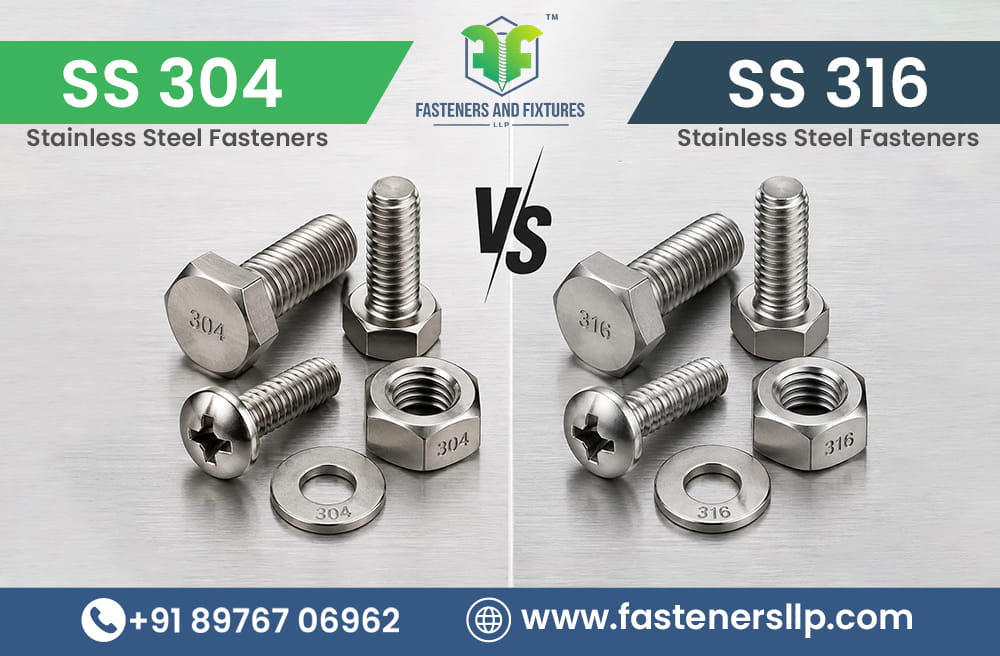
Bolts of stainless steel are made from a combination of iron, chromium, and nickel. These bolts are substantially used due to their durability, power, and resistance to rust and corrosion in masses, lots, and an awful lot less excessive environments. SS bolts are more common in huge advent, vehicle, and architectural uses. They are to be had in diverse grades, collectively with 304 and 316, each providing diverse stages of corrosion resistance and strength.

Key Differences Between Bolts of Hastelloy and Stainless Steel

To help you make a better decision, here is a detailed, thorough assessment of bolts of Hastelloy and stainless steel:

Feature

Hastelloy Bolts

Stainless Steel Bolts

Material Composition

Primarily nickel, molybdenum, and chromium

Iron, chromium, and nickel

Corrosion Resistance

Excellent resistance to corrosion, especially in acidic and high-temperature environments

Good resistance to corrosion, especially in non-acidic environments

Strength

High strength, particularly in extreme conditions

Strong but generally lower than Hastelloy in high-stress situations

Temperature Resistance

Performs well in extremely high temperatures

Performs well in moderate temperatures but less than Hastelloy

Cost

Expensive due to its high-performance features

More affordable and widely available

Best Applications

Chemical processing, aerospace, marine, and other extreme environments

Construction, automotive, food processing, and general manufacturing

Corrosion Resistance: Hastelloy vs. SS Bolts

One of the most important versions of Hastelloy and stainless-steel bolts is their corrosion resistance. Bolts of Hastelloy are designed to withstand corrosive environments, making them brilliant for chemical processing and industries that continuously work with rather acidic or alkali materials. These bolts can withstand pitting, crevice corrosion, and strain corrosion cracking, even in environments with uncontrolled temperatures.

In consideration, bolts of stainless steel are proof against rust and corrosion but aren’t as powerful in incredibly corrosive environments. SS bolts, specifically within the 304 and 316 grades, provide extraordinary corrosion resistance in extreme conditions. For applications exposed to immoderate ranges of chemical substances or extreme temperatures, bolts of Hastelloy are the better solution.

Strength and Durability: Which One Is Better?

When it includes strength, both Hastelloy and SS bolts are entirely durable; however, their traditional average performance differs primarily based totally on the execution. Bolts of Hastelloy are engineered for immoderate-pressure environments and keep their energy even beneath alarming temperatures and competitive chemical exposure. This makes them the remarkable choice for industries that incorporate aerospace and chemical processing.

SS bolts, although not as resilient against intense situations as Hastelloy, offer exceptional toughness and are distinctly long-lasting in general conditions. They are normally used in the production and industries of automobiles, which have moderate environmental situations.

Cost: Is Hastelloy Really Worth It?

The price is an excellent difficulty at the same time as deciding between bolts of Hastelloy and stainless steel. Bolts of Hastelloy are typically an entire lot more pricey than bolts of stainless steel due to their advanced features and specialized production devices. However, for critical programs wherein popular performance and durability are paramount, the higher preliminary price can be justified. On the other hand, SS bolts are reasonably priced and widely available, making them a cost-effective possibility for popular applications.

Best Applications for Each Type of Bolt


  • Hastelloy Alloy Bolts: Due to their superior corrosion resistance and power in immoderate situations, bolts of Hastelloy are nicely carried out in applications like:
  • Chemical processing industries
  • Aerospace components
  • Marine engineering
  • High-temperature industrial environments


  • Stainless Steel (SS) Bolts: Ideal for less harmful conditions and working efficiently, SS bolts are nice for:
  • Construction responsibilities
  • Automotive components
  • Food processing tool
  • General production and employer use

Conclusion: Which One Should You Choose?

Ultimately, the choice between Hastelloy bolts and stainless steel bolts is primarily based on the needs or requirements of your assignment. If you’re managing corrosive environments, immoderate temperatures, or immoderate-strain situations, Fasteners & Fixtures’s bolts of Hastelloy are the first-rate preference irrespective of their higher cost. However, SS bolts provide cheaper and, regardless of the reality, incredibly durable solutions for favored programs with slight environmental subjection.

Consider your assignment’s precise necessities—whether or not it’s the need for advanced corrosion resistance, energy, or cost-effectiveness—and make the selection that guarantees the incredible brand’s well-known performance and sturdiness.

The Role of Stainless Steel Studs in Corrosion-Resistant Systems

The Role of Stainless Steel Studs in Corrosion-Resistant Systems

When it includes ensuring the sturdiness and durability of business enterprise systems, corrosion is one of the demanding concerns. From pipelines and devices to structural components, metals exposed to harsh environments are liable to rust and degradation. This is where Fasteners & Fixtures‘ SS studs come into play. Stainless steel studs, one of the most dependable and corrosion-resistant fasteners, are important to the capability of corrosion-resistant structures in an entire lot of industries.

This blog will study the position of SS studs, their significance for corrosion prevention, and the elements that cause them to be a popular preference among the best studs manufacturers.

Stainless Steel Studs: What Are They?

Threaded fasteners made from SS are called Stainless-Steel studs. They are to be had in a massive form of sizes and styles and are frequently applied to enroll in elements of a massive array of packages. The key function of SS studs is their resistance to rust, corrosion, and marking, making them quality to be used in environments in which conventional steel fasteners can also fail.

Why Stainless-Steel Studs Are Essential for Corrosion-Resistant Systems

  1. Durability in Harsh Environments

The primary reason SS studs are so valuable is their durability. There is an excessive amount of chromium in stainless steel, especially in grades 304 and 316, which causes a thin film of chromium oxide to shape at the ground. This layer, together with moisture, salts, and chemical materials, serves as a barrier to keep corrosive materials out of the passage. As a result, SS studs can go through excessive temperatures, acidic environments, and exposure to water without showing signs and symptoms and signs of rust or corrosion. This makes them important to be used in marine, chemical processing, and food processing industries, amongst others.

  1. Long-Term Cost Savings

Although SS studs may additionally, moreover consist of a higher preliminary rate in assessment to first-rate fasteners, their lengthy-term benefits a long manner outweigh this. Since Stainless steel is resistant to corrosion, it lessens the want for frequent replacements and protection, leading to remarkable economic savings over time. When studs made from decrease-grade substances rust or degrade, the subsequent maintenance may be very high-priced and time-consuming. SS studs make sure your systems are walking results with minimal interruptions.

  1. Enhanced Strength and Performance

In addition to corrosion resistance, studs of stainless steel offer superb power and mechanical homes. They can face up to excessive loads and offer advanced preserving strength in the assessment of specific materials. Whether carried out in heavy devices, car components, or infrastructure, SS studs make certain that your structures live normally and robustly beneath stress.

  1. Versatility and Customization

Another gain of stainless-steel studs is their versatility. Manufacturers can produce stainless-steel studs in diverse shapes, sizes, and designs to shape unique programs. Whether you want custom threads, particular dimensions, or specific coatings, Fasteners & Fixtures—one of the essential stud manufacturers—can provide tailored solutions that meet your actual necessities.

  1. Ease of Installation and Maintenance

Stainless metal studs are smooth to put in and hold. Their excessive resistance to corrosion reduces the hazard of rusting threads or fasteners that come to be hard to unscrew. This function makes upkeep and changes brief and simple, particularly in business environments wherein downtime may be pricey.

Applications of Studs of Stainless Steel in Corrosion-Resistant Systems

Studs of Stainless Steel are applied in a huge kind of industry wherein corrosion resistance is critical. Here are some of the most common applications:

Industry

Application

Marine

Used in shipbuilding, docks, and offshore structures to resist saltwater corrosion.

Chemical Processing

Ensures stability and resistance to aggressive chemicals in reactors and pipelines.

Oil and Gas

Fasteners are used in drilling equipment, pipelines, and refinery systems where rust prevention is critical.

Food and Beverage

SS studs are used in food processing and storage equipment to meet hygiene and corrosion standards.

Construction

Commonly used in bridges, towers, and infrastructure to ensure long-term durability in harsh weather.

Choosing the Right SS Stud Manufacturer

When selecting a supplier, it’s vital to choose a producer that offers high-quality materials, specific manufacturing, and dependable customer service. Here are some subjects to not forget:


  • Material Quality: Ensure the producer uses high-grade stainless steel, together with 304 or 316, mentioned for its advanced corrosion resistance.
  • Customization Options: Look for a manufacturer that gives customization to meet your particular necessities.
  • Certifications: A high-quality producer wants to offer certifications for their products, making sure they meet corporation requirements for safety and excellence.
  • Experience and Reputation: Choose a manufacturer with years of experience and superb critiques from preceding customers.

Conclusion

In conclusion, stainless steel studs are a crucial detail of corrosion-resistant structures at some stage in several industries. Their durability, cost-effectiveness, and capability to stand under loads in harsh environments cause them to be the best preference for applications in which corrosion is a concern. Whether you’re seeking a robust tool in a chemical plant, gathering a marine form, or enhancing the reliability of your infrastructure, SS studs offer the power and protection you want.


Suppose you’re looking for wonderful studs of stainless steel. In that case, it is vital to accomplice with trusted studs manufacturers like Fasteners & Fixtures, who can supply durable and reliable answers to your precise dreams.

Bolt | Types, Parts, Manufacturing, Material Selection, Applications

Bolt | Types, Parts, Manufacturing, Material Selection, Applications

Bolts are important fasteners used throughout genuinely every industry, from the automobile to the aerospace industry. They are designed to sign up for or more factors together securely, frequently through using a nut. Whether you’re jogging on a complex mechanical assembly or a smooth home repair, expertise in the distinct kinds of bolts, their components, material selection, and applications can assist in ensuring the proper desire for the interest. In this blog, we will dive into the arena of bolts, imparting insights into their types, production methods, materials, and applications. If you’re searching for a dependable bolt producer or bolt fastener supplier such as Fasteners & Fixtures, this manual will be helpful.

What is a Bolt?

A bolt is a kind of mechanical fastener used to preserve items or substances collectively. It consists of a threaded shaft with a head, usually used together with a nut to create a steady joint. Unlike screws, bolts commonly require a nut to preserve them in the region. Bolts are regularly applied in applications in which the fastener ought to undergo massive mechanical pressure and offer a high stage of clamping force.

Types of Bolts

There are numerous one-of-a-type forms of bolts, every designed for specific applications. Below are some of the most commonplace sorts:

  • Hex Bolts: Hex bolts are possibly the most common form of bolt. They have a hexagonal head and are utilized in a huge sort of applications, consisting of creation and automobile. The flat floor of the hex head lets in them to be tightened or loosened with a wrench.
  • Carriage Bolts: Carriage bolts have a rounded head with a square neck beneath. The square neck permits to prevent the bolt from turning even as it’s far being tightened, making it great for wood structures, furnishings, and metallic connections.
  • Lag Bolts: Lag bolts are massive, heavy-responsibility bolts often utilized in woodworking and production. These bolts characteristic a thick, coarse thread and are designed to stable heavy gadgets or parts to wooden.
  • Anchor Bolts: Anchor bolts are used to steady structures to concrete. These bolts are embedded into concrete foundations and are important for containing properties, equipment, and different device in place.
  • Shoulder Bolts: Shoulder bolts are used in applications in which a completely unique, smooth surface is needed for rotational movement. They are regularly utilized in equipment, car additives, and as pivots for transferring elements.
  • U-Bolts: U-bolts have a U-form and are often used to steady pipes or rods to structures. They are normally located in plumbing and mechanical applications.

Parts of a Bolt

A common bolt is made from several key components that ensure its function and reliability:

  • Head: The head of the bolt gives a floor for equipment to grip and practice torque. The head may be hexagonal, rectangular, spherical, or different shapes depending on the sort of bolt.
  • Shank: The lengthy, cylindrical part of the bolt. The shank can be completely or in part threaded.
  • Thread: The helical ridge that wraps around the shank of the bolt. The threads are designed to interact with the nut or the tapped hole within the element being fixed.
  • Neck: The segment just under the pinnacle of the bolt. In some bolts, the neck is specially formed (as in carriage bolts) to save you the bolt from rotating.
  • Point: The stop of the bolt, which may be flat, pointed, or blunt, relying on the applications.

Manufacturing of Bolts

Bolts are usually synthetic using a procedure known as cold heading, in which metallic cord is heated and formed into the shape of a bolt. As we are a leading bolt manufacturer our production systems include numerous processes:

  • Wire Drawing: The steel is drawn into cord of the preferred duration.
  • Cold Heading: The wire is fed into a machine that makes use of dies to form the bolt’s head and frame.
  • Thread Rolling: Once the primary bolt form is shaped, the threads are rolled onto the shank the use of specialized dies.
  • Heat Treatment: Heat remedy strategies along with quenching and tempering are used to decorate the strength and hardness of the bolt.
  • Finishing: The bolts are wiped easy, covered (e.g., galvanized, zinc plating), and occasionally polished to satisfy unique necessities for corrosion resistance and appearance.

Material Selection for Bolts

Selecting the proper material for bolts is important to making sure they perform properly in their meant application. Common substances include:

  • Carbon Steel: Often used for popular-cause bolts, carbon metallic offers an awesome balance of energy, hardness, and fee.
  • Stainless Steel: Stainless metallic bolts are notably proof against corrosion and are perfect for marine, meals processing, and chemical environments.
  • Alloy Steel: For heavy-duty applications, alloy steel bolts offer advanced electricity and overall performance at high temperatures.
  • Titanium: Known for its excessive electricity-to-weight ratio and corrosion resistance, titanium bolts are generally utilized in aerospace and clinical devices.
  • Brass and Bronze: For applications wherein corrosion resistance is crucial but power is less of a project, brass or bronze bolts can be used.

The choice of material will depend upon factors which incorporates the jogging surroundings (e.g., exposure to moisture, chemical substances, or high temperatures), energy requirements, and price issues.

Applications of Bolts

Bolts are utilized in a widespread variety of applications across many industries. Some key regions embody:

  • Construction: Bolts are crucial for securing beams, columns, and exceptional structural components in buildings and bridges.
  • Automotive: Bolts preserve collectively vital components like engines, suspension systems, and frames in vehicles.
  • Aerospace: In aerospace, bolts need to resist excessive situations, such as high temperatures and pressures. Bolts are utilized in engine assemblies, aircraft frames, and touchdown gear.
  • Marine: In the marine enterprise, bolts are used to gather deliver hulls, turbines, and different tool this is uncovered to harsh saltwater environments.
  • Heavy Machinery: Bolts are important for the assembly of commercial enterprise equipment, turbines, and other heavy-demand gadget.

Why Choose Fasteners & Fixtures?

As a trusted bolt manufacturer and bolt fastener supplier, we offer a massive kind of brilliant bolts to fulfill the desires of diverse industries. Whether you are seeking out custom bolt answers or trendy fasteners, we offer products that supply reliability, durability, and overall performance in demanding applications. Our bolts are manufactured to the very high-quality standards, ensuring they meet the stringent first-rate requirements of industries like construction, vehicle, aerospace, and further.

In conclusion, knowledge the different types, elements, and programs of bolts is important for deciding on the right fastener on your challenge. With the right bolt, you could ensure the protection, integrity, and longevity of your assembly. Contact Fasteners & Fixtures nowadays to speak approximately your bolt wishes and find out how our splendid products assist you to entire your subsequent venture correctly.