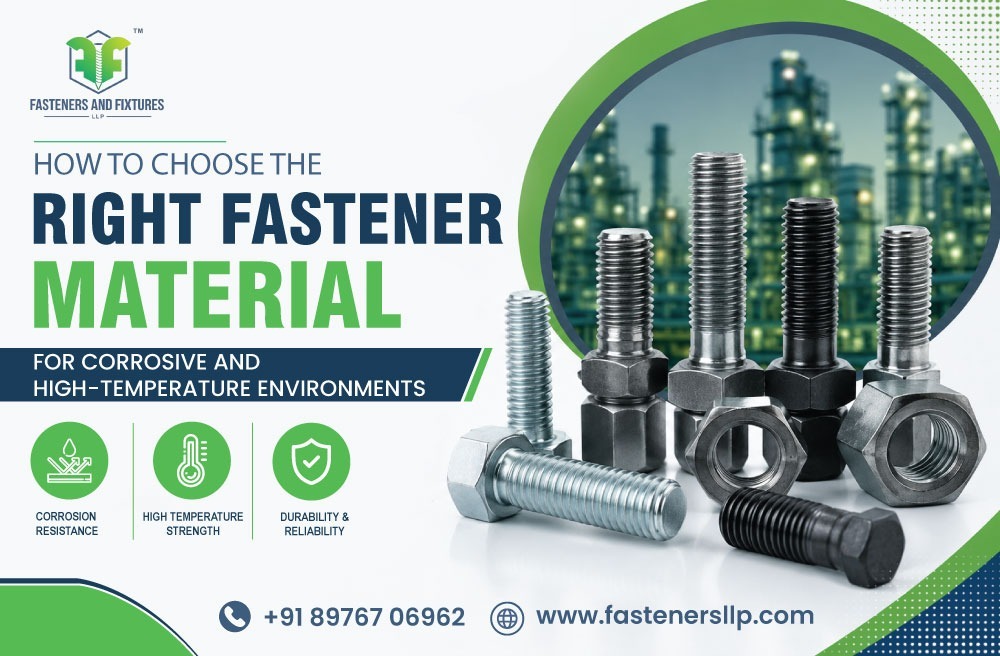
How to Choose the Right Fastener Material for Corrosive and High-Temperature Environments?

Fasteners may be small components, but they play a critical role in maintaining the safety, strength, and reliability of industrial equipment. In corrosive and high-temperature environments, selecting the wrong bolt, nut, stud, screw, or washer material can lead to corrosion, loss of mechanical strength, thread damage, leakage, and premature joint failure. Therefore, choosing the right fastener material requires careful consideration of temperature, chemical exposure, mechanical loads, and operating conditions.

For industries such as oil and gas, petrochemicals, power generation, marine, chemical processing, pharmaceuticals, and heavy engineering, high-performance fasteners are essential. Fasteners and Fixtures LLP provides fasteners in stainless steels, nickel alloys, duplex and super duplex steels, carbon steels, and other specialty materials for demanding applications.

Why Fastener Material Selection Matters

A fastener must retain its mechanical properties and resist environmental degradation throughout its service life. Corrosion can reduce the effective cross-section of a fastener, damage threads, and compromise preload. At elevated temperatures, materials may experience reduced strength, oxidation, creep, or thermal expansion.

The ideal material therefore needs to balance:

  • Corrosion resistance
  • High-temperature strength
  • Tensile and yield strength
  • Resistance to oxidation and chemical attack
  • Compatibility with mating components
  • Dimensional stability
  • Cost and availability
  • Applicable industry standards

A Leading Fastener Manufacturer in India should be able to help customers match the fastener grade with the actual operating environment rather than simply recommending the most expensive material.

Step 1: Identify the Corrosive Environment

The first step is understanding what type of corrosion the fastener will encounter. Moisture, salt water, chlorides, acids, alkalis, chemicals, and industrial gases can affect different materials in different ways.

For general atmospheric and industrial applications, stainless steel fasteners can provide good corrosion resistance. SS 304 is commonly considered for moderately corrosive conditions, while SS 316 and 316L offer improved resistance where chlorides and marine exposure are concerns. Fasteners and Fixtures LLP lists stainless steel grades including 304, 304L, 316, 316L, 309, 310, 317L, 321, and 347.

For more aggressive environments, duplex and super duplex stainless steels or nickel-based alloys may be more appropriate. The final selection should always be based on the specific chemical composition, concentration, temperature, and exposure duration.

Step 2: Consider Operating Temperature

Temperature is just as important as corrosion resistance. A material that performs well at room temperature may not retain the same strength at elevated temperatures.

For high-temperature applications, grades such as stainless steel 309, 310, 321, and 347 may be considered depending on the service conditions. Nickel-based alloys such as Inconel, Hastelloy, and Monel can also be selected for specialized environments requiring combinations of heat, corrosion, and mechanical resistance.

Fasteners and Fixtures LLP specifically supplies exotic-grade fasteners, including high-nickel and specialty alloys, for stringent applications such as power plants, refineries, HVAC and thermal systems, and heavy engineering projects.

However, there is no universal “high-temperature fastener.” Engineers should evaluate the actual continuous and peak temperature, thermal cycling, load conditions, atmosphere, and applicable material specifications.

Step 3: Match the Material to Mechanical Loads

Corrosion and temperature are not the only considerations. Fasteners must also withstand tensile loads, shear forces, vibration, pressure, and thermal stresses.

High-strength alloy steel fasteners can be suitable for applications demanding high mechanical strength, while stainless steel, duplex stainless steel, and nickel alloys may be selected when corrosion resistance is equally important.

The fastener’s mechanical properties should be checked against the project specification and applicable standards. The bolt, nut, and washer combination should also be compatible so that the joint performs as an integrated system.

Step 4: Understand Thermal Expansion and Creep

High-temperature equipment can experience repeated heating and cooling. Different materials expand and contract at different rates. If the fastener and connected components have significantly different thermal expansion characteristics, joint preload can change during operation.

Creep is another consideration at elevated temperatures. Under sustained load, some materials can gradually deform, reducing clamping force. For critical high-temperature applications, engineers should therefore consider creep resistance and long-term mechanical performance rather than relying only on room-temperature tensile strength.

Step 5: Select Between Stainless Steel, Duplex and Nickel Alloys

A simplified material-selection approach can help narrow the options:

Stainless Steel Fasteners: Suitable for many general corrosion-resistant applications. SS 304/304L is widely used, while SS 316/316L is often preferred for more chloride-prone environments.

Duplex and Super Duplex Fasteners: Useful where higher strength and enhanced corrosion resistance are required. These materials are frequently considered for demanding chemical, marine, oil and gas applications.

Nickel Alloy Fasteners: Appropriate for highly demanding environments involving elevated temperatures, aggressive chemicals, oxidation, and severe corrosion. Fasteners and Fixtures LLP lists materials including Hastelloy, Monel, and Inconel among its product range.

Alloy Steel Fasteners: Often selected where mechanical strength and resistance to high loads are primary requirements, particularly when environmental conditions are controlled or protective coatings are appropriate.

Step 6: Check Standards, Testing and Traceability

Material selection should always be supported by appropriate documentation. Buyers should verify the material grade, dimensions, mechanical properties, heat treatment, applicable standard, and test requirements.

For critical industrial fasteners, Mill Test Certificates (MTCs), inspection reports, and third-party testing may be required. Fasteners and Fixtures LLP states that it provides material documentation including EN 10204 3.1 and 3.2 certificates, along with third-party and laboratory testing options.

Working with a Top Fastener Supplier in India that understands documentation and traceability can reduce the risk of receiving an incorrect or inconsistent material grade.

Step 7: Consider Galvanic Compatibility

When two dissimilar metals come into contact in the presence of an electrolyte, galvanic corrosion can occur. Therefore, the fastener should be evaluated alongside the material of the equipment or structure being joined.

For example, selecting a highly corrosion-resistant alloy fastener does not automatically eliminate corrosion risks if it is paired with an incompatible material in a wet or salty environment. Proper material matching, insulation, coatings, and joint design may be necessary.

Why Choose Fasteners and Fixtures LLP?

Choosing a reliable supplier is as important as selecting the correct grade. Fasteners and Fixtures LLP offers bolts, nuts, studs, washers, screws, and customized fasteners across stainless steel, nickel alloys, duplex, super duplex, and other specialty materials. Its website states that its manufacturing facility is located in Navi Mumbai and that it serves demanding industries including oil and gas, refineries, power plants, marine, pharmaceuticals, and heavy engineering.

The company also highlights quality testing, material traceability, inspection support, warehousing, and fast delivery for industrial requirements.

For buyers looking for the Best Fastener Stockist in India, factors such as inventory depth, material availability, certification, dimensional accuracy, technical support, and delivery capability should be considered alongside price.

Final Thoughts

Choosing the right fastener material for corrosive and high-temperature environments is an engineering decision, not simply a purchasing decision. Start by evaluating corrosion exposure, operating temperature, mechanical loads, thermal cycling, chemical compatibility, and required standards. Then select a material that provides the necessary combination of strength, corrosion resistance, and temperature performance.

Whether you require stainless steel, duplex, super duplex, alloy steel, Inconel, Hastelloy, Monel, or another specialty grade, working with an experienced supplier can help ensure that the selected fasteners meet project requirements.

Fasteners and Fixtures LLP aims to provide engineered fastening solutions for demanding industrial applications, making it a suitable option for companies seeking a Leading Fastener Manufacturer in India, Top Fastener Supplier in India, and Best Fastener Stockist in India.

FAQs About Fastener Material Selection

1. What is the best fastener material for corrosive environments?

There is no single best material for every corrosive environment. Stainless steel such as SS 316/316L, duplex, super duplex, or nickel alloys may be selected depending on chemicals, chloride exposure, temperature, and mechanical requirements.

2. Which fasteners are suitable for high-temperature applications?

High-temperature applications may require specialized stainless steels, alloy steels, or nickel-based alloys such as Inconel and Hastelloy. The correct grade depends on operating temperature, loading, atmosphere, and corrosion conditions.

3. How do I choose the right fastener grade?

Evaluate temperature, corrosion exposure, tensile and shear loads, vibration, thermal cycling, mating materials, standards, and required certifications before selecting the fastener grade.

4. Why are nickel alloy fasteners used in extreme environments?

Nickel alloy fasteners can provide excellent resistance to heat, oxidation, and aggressive corrosion. They are therefore considered for demanding applications in chemical processing, oil and gas, power generation, and other specialized industries.

5. What should I check before buying industrial fasteners?

Check the material grade, dimensions, applicable standards, mechanical properties, surface finish, heat treatment, certification, MTC, inspection requirements, and supplier’s quality-control capabilities. Choosing an experienced Top Fastener Supplier in India can help ensure reliable and traceable products.
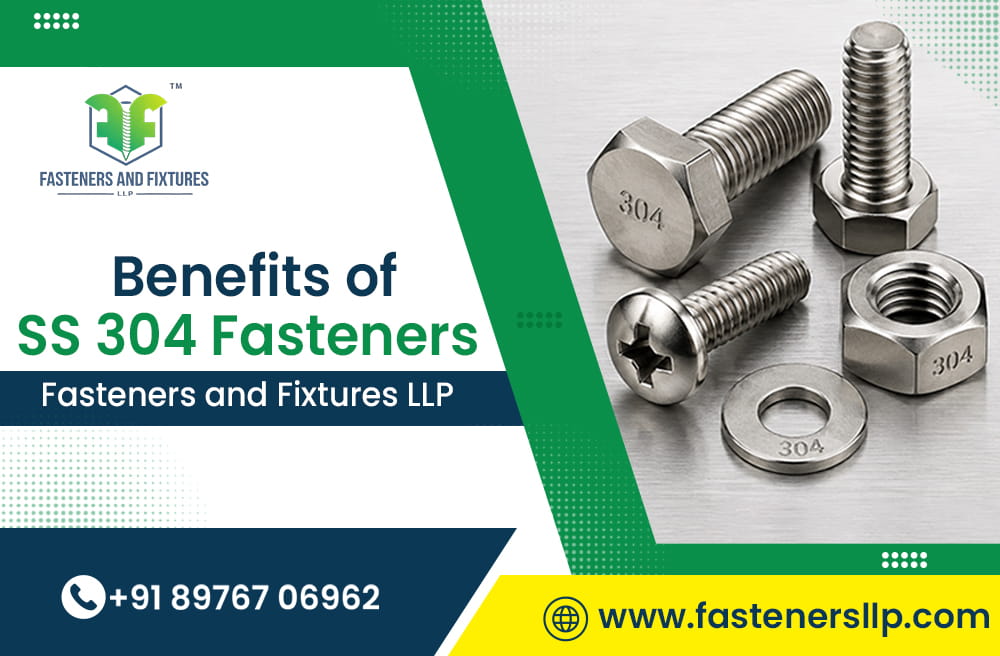
Benefits of SS 304 Fasteners – Fasteners and Fixtures LLP

In terms of reliable fastening options, SS 304 fasteners are one of the most popular stainless steel choices for commercial, industrial, and construction projects. Their combination of resistance to corrosion, long-lasting flexibility, and a beautiful finish makes them ideal for areas where carbon steel fasteners can become brittle over time.

For companies looking for reliable components for fastening, Fastnersllp provides stainless steel fasteners that are available in a variety of sizes, grades, and standards. The stainless steel selection encompasses SS 304 and SS 316 fasteners, as well as washers, bolts and nuts, screws, studs and anchors, and other fastening items.

What Are SS 304 Fasteners?

SS 304 fasteners are manufactured out of Grade Austenitic 304 stainless, often known as UNS S30400 and Werkstoff 1.4301. It is a high-quality grade that contains substantial amounts of nickel and chromium and chromium is responsible for the oxide layer that is passive and that is responsible for stainless steel’s corrosion resistance. The typical composition ranges published for 304 are 18-20% chromium and 8-10.5 percent nickel, subject to the applicable specifications.

They come in a variety of types, such as nuts, hex bolts, washers, screws, threaded rods, fasteners, and socket-head screws. SS 304 fasteners can also be produced or delivered in accordance with standards like ASTM, ASME, DIN, ISO, and other applicable specifications. We at Fastnersllp offer your business the best SS 304 fasteners in India.

Properties of SS 304 Fasteners:

Popularity of SS 304 fasteners comes from their balanced physical and mechanical characteristics.

The most important properties are:

  • Excellent corrosion resistance: The chromium-rich passive layer helps to protect the material from general atmospheric corrosion.
  • Strong: The most common minimum tensile strength of stainless steel 304 is approximately 515 MPa. It also has a 0.2 percent proof/yield strength of around 205 MPa, based on the specifications of the steel and its condition.
  • High ductility: It can be used to meet fabrication and forming requirements efficiently.
  • Tolerance to temperature: It performs well over a wide range of common commercial and industrial temperature environments.
  • Attractive design: Its clean metallic finish makes it ideal for use in applications where design is important.
  • Low maintenance: Steel’s resistance to corrosion can cut down on the need for periodic replacements and protective coatings.

A key point to remember is the fact that stainless steel shouldn’t necessarily be regarded as superior to any carbon-steel fastener. Fasteners and Fixtures LLP mentions that it is true that stainless steel fasteners may be less robust than fasteners made from hardened steel despite having significant anti-corrosive advantages.

Major Advantages of SS 304 Fasteners

1. Superior Corrosion Resistance

The main benefits that come with SS 304 fasteners are their durability against corrosion in many common situations. This makes them ideal for both outdoor and indoor applications in which exposure to moisture and air is a common occurrence.

2. Long Service Life

Since SS 304 resists general corrosion when properly installed and selected, fasteners are able to provide reliable service for a long time. This could help to reduce the frequency of replacement and maintenance.

3. Versatile Applications

SS 304 fasteners can be employed in engineering, construction machinery, food-related equipment, as well as architectural and all general industrial applications.

4. Good Aesthetic Appeal

For an installation that is visible, stainless steel offers an attractive and professional appearance. This is why stainless fasteners are often chosen for decorative and architectural installations.

5. Easy Availability

A wide range of SS 304 bolts, nuts, washers, screws, and other fasteners are readily available on the Indian market. Fasteners and Fixtures LLC offers imperial and metric size fasteners made from stainless steel, as well as different design options.

Uses of SS 304 Fasteners:

The wide range and versatility of SS 304 make these fasteners suitable for a variety of fields and types of applications.

Common applications include:

  • Structural and construction assemblies
  • Equipment and machinery
  • Automotive components
  • Architectural structures
  • Food processing equipment
  • Electronic and enclosure assembly
  • Outdoor fixtures
  • General engineering applications
  • Industrial fabrication
  • Fixtures for commercial and residential furniture

But when choosing a material, be based on the specific environment. In extremely chloride-rich and challenging environmental conditions, SS 316 may be more suitable because molybdenum has extra resistance to corrosion caused by chloride.

SS 304 Fasteners Chart:

A simple chart of SS304 fasteners will help buyers comprehend the most popular product categories:

Fastener Type Common Application
Hex Bolts Machinery and structural assemblies
Hex Nuts Threaded bolt assemblies with matching threads
Washers Distribution of loads and protection of surfaces
Socket Screws Compact machine assemblies
Threaded Rods Support and fabrication systems for support and fabrication
Anchor Fasteners Concrete and applications to masonry
Stud Bolts Industrial equipment and pipes assemblies
Machine Screws Component assembly and equipment

Sizes, thread types, as well as standards and finishes must be confirmed in accordance with your project’s requirements.

Care and Maintenance:

SS 304 is corrosion-resistant, but proper maintenance can keep its appearance and function. Make sure that fasteners are kept clear of dirt and remove any accumulations of salts, as well as any pollutants. Avoid contact with chemicals that are corrosive unless the material has been specially chosen for the specific setting.

During installation, keep away from the possibility of contamination by carbon-steel tools or other particles where the cleanliness of the surface is crucial. A proper tightening procedure is essential as excessive torque could cause damage to threads or compromise the structural integrity of the piece.

Inspections are routine and can be very beneficial when working in industrial, outdoor, or chemically-exposed areas. Check for deposits, discoloration, broken threads, loosening of threads, or indications of corrosion that is localized.

Choosing the Right SS 304 Fasteners:

The process of selecting the most effective SS 304 fasteners in India involves more than just selecting the lowest-priced product. Be aware of the following elements:

Classification: Confirm that SS 304 is appropriate for the working environment.

Dimensions: Select the correct size, length, and diameter configuration.

Standard: Select the necessary ASTM, ASME, DIN, ISO, IS, or standards that are specific to a project.

Type of Fastener: Match the bolt, the nut, screw anchor, or washer to the assembly.

Requirements for load: Consider tensile, shear, vibration, and the installation load.

Information: For critical applications, request material certificates as well as the relevant documentation for testing or inspection. Fasteners and Fixtures LLP states that it will provide mill test results along with third-party inspections and tests in laboratories on its items.

SS 304 Fasteners Price List in India:

The SS prices for fasteners in India cannot be a fixed number. Pricing is based on the grade, length, diameter, and type of fastener. It also depends on thread standard, finish, quantities, manufacturing requirements, and current raw material stainless steel prices.

Thus, anyone looking to find a Fasteners SS 304 price list should ask for an updated price quote that is based on precise specifications instead of using general online prices. Large quantities and custom requirements can also affect the final commercial price.

Why Choose Fasteners and Fixtures LLP?

If you are a buyer looking for SS fasteners 304 India, Fasteners and Fixtures LLP offers a wide stainless steel fastener selection for engineering and industrial needs. The company provides a wide range of types of stainless steels, types of products dimensions, and international standards. It also provides information on quality testing documents, support for delivery, and after-sales services.

If you need standard SS bolts and nuts made of 304 or a specific type of fastening solution for your application, a supplier who knows the materials, dimensions, standards, and requirements for quality can make an enormous difference.

SS 304 fasteners offer an optimal balance between corrosion resistance, strength, appearance, durability, and flexibility. Their broad range of uses makes them an excellent option for engineering, construction machinery, architectural, or general industrial work.

From knowing the SS fasteners chart to looking at specifications and getting the most recent SS304 fasteners cost list, buyers should consider the whole application, not just the price on its own. If they choose the correct dimension, grade, and installation practices, SS 304 fasteners can provide reliable, long-lasting fastening performance.

1. What are SS 304 fasteners used for?

SS 304 fasteners are employed in construction, automobile assemblies, machinery and architectural installations, outdoor fixtures, food-related equipment, and other general engineering applications.

  1. Do SS 304 fasteners corrosion-resistant?
    Yes. SS 304 contains chromium that acts as a passive layer of protection that provides good resistance to general corrosion in a variety of industrial and atmospheric environments.
  2. How can I select the most effective SS 304 fasteners?
    Be aware of the environment in which you will be using it and load requirements, the thread size, size of the fastener standard, method of installation, and any required documentation prior to selecting the right product.
  3. What are the factors that affect SS 304 fasteners price list in India?
    Size, type, quantities, manufacturing specifications, and the current prices for raw materials can influence the final cost.
  4. Are SS 304 fasteners suitable for marine use?
    SS 304 can be suitable for a variety of general outdoor uses; however, environments that have high exposure to chloride may require a stronger, more corrosion-resistant material like SS 316.

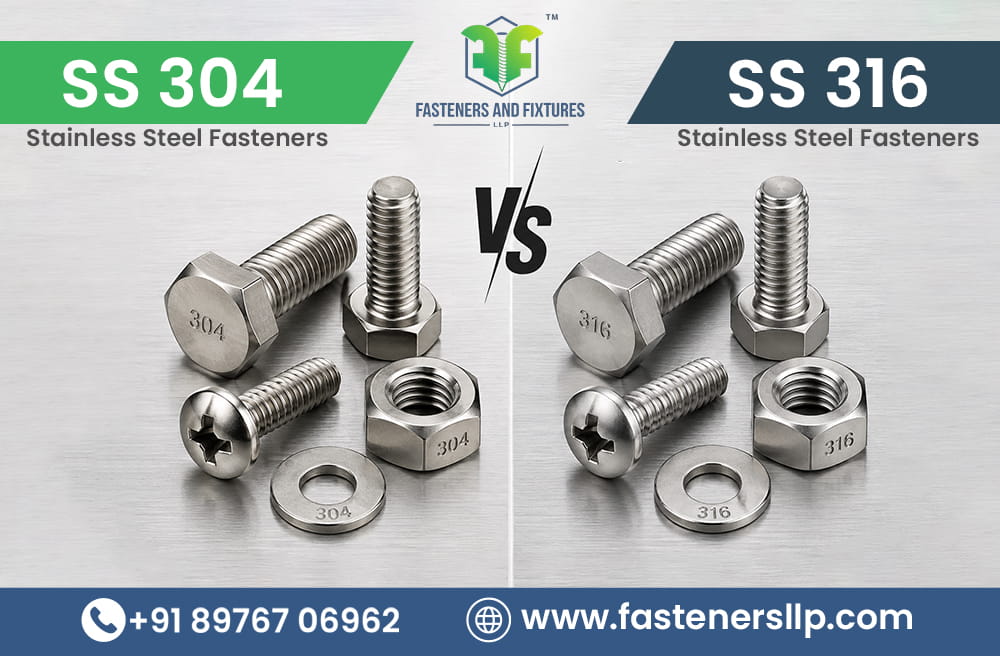
Do you know the Difference Between SS 304 vs SS 316 Stainless Steel Fasteners?

Fasteners made of stainless steel are widely employed in engineering, construction, automotive, marine, food processing, industrial, and architectural applications due to their durability, strength, and resistance. The most frequently used kinds are SS 304 and SS. Although both are part of an austenitic stainless steel class, their composition and properties make them appropriate for various situations.

Understanding the difference between SS 304 and SS 316 is essential when selecting nuts, bolts, washers, screws, and other fastening components that fasten. The correct grade will increase the life of your service, decrease maintenance, and offer better resistance to the most demanding operating conditions.

SS 304 vs SS 316: What Is the Difference?

SS 304 is one of the most popular types of stainless steel. It has good resistance to corrosion, shapeability, strength, and value, making it a good all-purpose stainless steel material for fasteners.

SS 316 provides enhanced corrosion resistance since it is made up of molybdenum. This makes it ideal for areas that have chlorides, saltwater, chemicals, and other conditions that cause corrosion.

In simple words, SS 304 is an excellent choice for general-purpose use, and SS 316 is generally preferred for environments that are more abrasive.

SS 304 vs SS 316 Chemical Composition:

The major difference is apparent when you compare SS 304 and SS 316 chemical composition.

SS 304 primarily contains iron along with nickel and chromium, with chromium providing resistance to corrosion and nickel enhancing its austenitic structure and strength.

SS 316 contains chromium and nickel too; however, it also has around 2 percent molybdenum. This extra element greatly enhances the resistance to pitting as well as crevice corrosion, specifically in chloride-rich environments.

Common compositions include:

Element SS 304 SS 316
Chromium ~18-20% ~16-18%
Nickel ~8-10.5% ~10-14%
Molybdenum Not deliberately included ~2-3%
Iron Balance Balance

Limits can be different in accordance with the applicable standard and the product’s specifications. So, it is important to examine the certification of the material as well as relevant grade specifications for critical applications.

Stainless Steel 304 vs 316 Strength:

When it comes to comparing Stainless Steel 304 vs 316 strength, the differences are not always that dramatic. Both grades provide high mechanical properties, durability, and resistance to a variety of conditions of use.

SS 304 is widely used in situations where strength and corrosion resistance are required, but without exposure to extremely aggressive conditions. SS 316 can provide comparable mechanical performance, while also offering greater resistance to corrosion.

For fasteners, however, strength is not the only selection factor. Thread design, the class of the fastener manufacturing procedure, heat treatment where necessary, dimensions, and load conditions can all impact the performance.

Therefore, deciding between SS 304 and SS 316 shouldn’t be solely based on strength. The environment around you is usually the most important factor.

Types of Stainless Steel Fasteners:

Fasteners come in a variety of designs to meet various requirements for joining. Some of the popular Types of Stainless Steel Fasteners available in the market are given below:

  • Stainless Steel Bolts: They are used for mechanical and structural assemblies.
  • Stainless Steel Nuts: They are paired with bolts to ensure strong threaded connections.
  • Stainless Steel Screws: They are suitable for machine fabrication, equipment, or general assembly.
  • Stainless Steel Washers: Help distribute loads and protect surfaces adjacent to them.
  • Threaded rods and studs are used for pipe, equipment, or industrial components.
  • Self-Tapping Screws: They are useful when the fastener is able to create or engage threads in the course of installation.

The right grade of fastener should be chosen based on the purpose, the environment, loads, and the relevant standards.

SS 316 vs SS 304: Which One Should You Choose?

The answer is contingent on the specific application.

Select SS304 for the following reasons:

  • General resistance to corrosion
  • Affordable stainless steel fasteners made from stainless steel
  • Applications for moderately corrosive or indoor environments
  • Applications for construction and fabrication
  • Kitchen-related and food-processing environments
  • General assembly of machinery and equipment

Select SS316 to get:

  • Greater resistance to exposure to chlorides
  • Superior performance in the marine environment
  • Better resistance to crevice and pitting corrosion
  • Chemical processing applications
  • Coastal construction
  • Outdoor applications exposed to harsh weather conditions

SS 316 generally costs more than SS 304 because of its alloying composition. However, the extra corrosion resistance could justify the expense, especially in situations where the failure of a fastener prematurely may result in maintenance costs or other operational issues.

Stainless Steel 304 vs 316 for Water Bottle:

The contrast between stainless steel 304 and the 316 used to be used in water bottle applications is also standard. SS 304 is extensively used for beverage and food containers as it has good anti-corrosion properties and it is suitable for a variety of common applications.

SS 316 can offer additional corrosion resistance, particularly if exposure to salts or other aggressive liquids are a problem. However, for normal drinking-water applications, SS 304 is often sufficient if it is well-constructed and maintained.

The same principles apply to fasteners. The best quality is determined by actual conditions of use rather than simply selecting the more costly material.

Stainless Steel 304 vs 316 for Jewelry:

The expression stainless steel304 and 316 for jewelry generally refers to the appearance as well as durability, skin-contact issues, and corrosion resistance.

Both grades provide the durability of stainless steel surfaces; however, SS 316 and its variants are typically chosen for use that requires greater resistance to corrosion. Jewellery exposed to moisture, sweat and environmental pollutants can benefit from an alloy that is resistant to corrosion.

For other skin-contact products, purchasers should be aware of the specific specifications for the product as well as the finish of the surface and any applicable safety standards rather than deciding on an item based solely on the basis of its name.

Uses of SS 304 and SS 316 Fasteners:

SS 304 fasteners are commonly employed in machines, architectural fabrication, food processing equipment, automotive components, furniture, general engineering, and other areas.

SS 316 fasteners are particularly suitable for marine structures, marine equipment, chemical processing facilities, pharmaceutical plants, water-treatment equipment, outdoor structures and installations which are exposed to chlorides.

A proper selection of materials can help to avoid corrosion-related issues such as pitting, staining, thread loss, and the rapid loss of integrity in fastening.

Why Choose Fastnersllp?

Choosing the right supplier of fasteners is as important as choosing the correct grades of stainless steel. Fastnersllp could be a viable option for a business seeking stainless steel fastening options based on requirements for the application, dimensions, grades, and specifications.

A reputable supplier must be able to aid customers in finding the appropriate fastener type, materials, grades, sizes, and finishes, as well as appropriate standards. For industrial applications that require a lot of effort, documents like the certification of material and specifications compliance are also important.

If the need is SS 304 or SS 316, buyers should concentrate on the same quality, precision in dimensional measurement, the right material selection, and reliable supply.

The decision of SS 304 and SS 316 stainless steel fasteners will ultimately depend on the operational environment. SS 304 is an excellent stainless steel that is general-purpose and offers the best balance between corrosion resistance, durability, and cost. SS 316, with its molybdenum percentage, is more suitable for applications involving marine conditions, chlorides, and more corrosive environments that are more severe.

Understanding SS 316 vs SS 304 and their chemical structure, strength types, and applications will help engineers, manufacturers, as well as procurement departments, make more informed selections. By assessing the conditions and loading requirements, as well as the specifications and the expected life of service, it is possible to select the correct stainless steel fastener to suit your specific application.

1. What is the primary distinction that separates SS 304 and SS 316 fasteners?

The main difference is the chemical composition. SS 316 contains molybdenum, which gives it better resistance to crevice and pitting corrosion, particularly in chloride-rich environments. SS 304 is generally preferred in a wide range of applications due to the fact that it provides excellent corrosion resistance and a cost that is a bit lower.

2. Are SS 316 stronger than SS 304?
SS 316 and SS 304 have mechanical properties that are broadly similar; however, their strength is contingent on the condition and the specifications. For fasteners, the necessary grade, standard, and application load should be taken into consideration instead of thinking it is the case that SS 316 is always stronger.

3. Which one is better for marine and outdoor bolts, SS 304 or SS 316?
SS 316 is generally the most preferred option for chloride-sensitive marine and high-chloride environments because of its molybdenum content. offers increased resistance to crevice and pitting corrosion.

4. Are SS 304 suitable for water bottles or food-related uses?
Yes. SS 304 is widely used in the food and beverage industry due to its resistance to corrosion and its suitability for a variety of everyday conditions. However, the product must meet the applicable requirements for food contact.

5. What are the differences between SS 304 and SS 316 stainless steel fasteners?
Take into consideration the environment that you are in, such as exposure to chlorides or chemicals, temperatures, and mechanical loads, the required service life, applicable, standards and budget. For general use, SS 304 is often acceptable, while SS 316 is generally advantageous for more corrosive environments. Fasteners LLP is a resource for buyers to determine the right type of fastener and specification of the material for their needs.

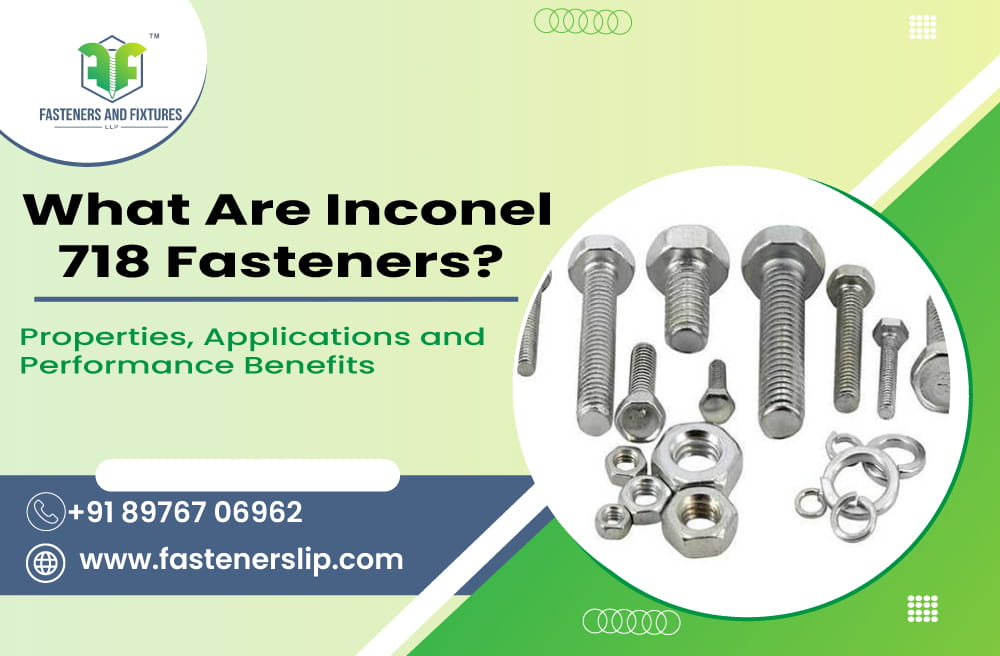
What Are Inconel 718 Fasteners? Properties, Applications and Performance Benefits

In the fields where extreme temperatures, corrosive environments and heavy mechanical loads are commonplace in routine operations, conventional fastening materials are often unable to ensure long-term reliability. This is the reason why Inconel 718 fasteners come into play as a top solution. The company is known for its exceptional durability, strength and resistance to oxidation and long-lasting these fasteners are extensively employed in the marine, aerospace oil and gaz, power generation and chemical processing industries.

In Fastners LLP, we manufacture and distribute high-end Inconel 718 fasteners specifically designed to meet the stringent specifications of crucial industrial applications across the globe. We will explore the characteristics of Inconel 718 fasteners, the most important properties they possess, application, as well as performance advantages.

What Are Inconel 718 Fasteners?

Inconel 718 Fasteners are fastening components manufactured from Inconel 718, a nickel-chromium-based superalloy known for its outstanding mechanical properties and resistance to extreme environments. It is a mixture of iron, nickel, chromium molybdenum and niobium. Aluminum, titanium which creates a unique mix of strength and resistance to corrosion.

These fasteners come in many forms, such as:

  • Bolts
  • Nuts
  • Screws
  • Washers
  • Stud Bolts
  • Threaded Rods
  • Anchor Fasteners

Of the many, Inconel 718 bolts are especially sought-after due to their ability to ensure structural integrity even when pressure is high and temperatures.

Chemical Composition of Inconel 718

The outstanding efficiency of Inconel 718 is due to its chemical composition that is carefully balanced:

  • Nickel (50-55%)
  • Chromium (17-21%)
  • Iron (Balance)
  • Niobium (4.75-5.5%)
  • Molybdenum (2.8-3.3%)
  • Titanium (0.65-1.15%)
  • Aluminum (0.2-0.8%)

This formulation allows precipitation hardening that significantly increases the durability and strength of the product.

Key Properties of Inconel 718 Fasteners

1. Exceptional High-Temperature Strength

One of the main features that distinguishes Inconel 718 fasteners is their capacity to maintain high tensile and yield strength even at temperatures of 700 degrees Celsius and above. Contrary to traditional stainless steel fasteners, these are not affected by mechanical instability when exposed to heat for long periods of time.

2. Superior Corrosion Resistance

Inconel 718 has excellent resistance to:

  • Oxidation
  • Chloride-induced corrosion
  • Sulfidation
  • Pitting corrosion
  • Crevice corrosion

This is what makes Inconel 718 bolts perfect to be used on offshore structures, chemicals plants and marine environments.

3. Outstanding Fatigue Resistance

Industrial equipment is often subject to high-frequency vibration and cyclic load. Inconel 718 offers the highest strength for fatigue, and guarantees the longest service life, even with stress variations.

4. Excellent Creep Resistance

At high temperatures, many substances deform because of creep. Inconel 718 fasteners provide an exceptional resistance to creep deformation which makes them ideal for turbine engines as well as high temperature processing equipment.

5. High Mechanical Strength

The alloy is extremely strong in yield and tensile strength when in comparison to traditional fastening material. This allows engineers to utilize smaller fasteners, without compromising their performance.

6. Good Weldability

Contrary to some alloys with high strength, Inconel 718 is a great weldable alloy with excellent fabrication capabilities which makes it easy to incorporate into complicated assemblies.

Applications of Inconel 718 Fasteners

Because of their distinct capability to perform, Inconel 718 Fasteners are utilized in a variety of high-demanding industries.

Aerospace Industry

The aerospace industry extensively uses Bolts made of Inconel 718 in:

  • Aircraft engines
  • Turbine turbine components
  • Exhaust systems
  • Structural assemblies
  • Rocket propulsion systems

Their capability to withstand extreme temperatures and mechanical stress is crucial for critical applications in flight.

Oil and Gas Industry

Petroleum and gas activities typically include corrosive chemicals and exposure to seawater and extreme pressures. Fasteners made of Inconel 718 are often employed in:

  • Offshore drilling rigs for drilling
  • Subsea equipment
  • Valves and pumps
  • Heat exchangers
  • Pressure vessels

Marine Industry

Marine environments are extremely corrosion-prone due to exposure to saltwater. Inconel 718 fasteners are extremely resistant to corrosion in seawater. They are often employed in:

  • Shipbuilding
  • Propulsion systems for marine vessels
  • Offshore platforms
  • Underwater equipment

Power Generation

For power plant applications, it is necessary to have fasteners that are capable to operate under extreme tensions and temperatures. Examples of applications include:

  • Gas turbines
  • Steam turbines
  • Nuclear power plants
  • Systems for heat recovery

Chemical Processing Industry

Chemical plants use aggressive chemicals which can rapidly degrade conventional fasteners. Inconel 718 has superior resistance to corrosive chemicals. This makes it ideal for:

  • Reactors
  • Processing vessels
  • Chemical pipelines
  • Industrial furnaces

Performance Benefits of Inconel 718 Fasteners

Increased Equipment Reliability

The excellent mechanics of Inconel 718 fasteners minimize the risk of failures in fasteners, and ensure the same performance of your equipment.

Longer Service Life

A high resistance to fatigue, corrosion and creep increases the life of both fasteners as well as the equipment they encase.

Reduced Maintenance Costs

Since these fasteners require lesser replacements, businesses can benefit from lower maintenance costs and less time to repair.

Enhanced Safety

The most critical applications in the fields of aerospace, power generation, as well as oil and gas require solid solutions for fastening. Bolts made of Inconel 718 offer the security protection needed in high-risk environments.

Better Performance in Extreme Conditions

If exposed to high temperatures, chemicals that are corrosive, or heavy mechanical loads Inconel 718 fasteners continue to be effective in situations where traditional fasteners might fail.

Why Choose Fastners LLP for Inconel 718 Fasteners?

Fastners LLP is a trusted manufacturer and supplier of premium quality Inconel 718 fasteners designed to meet international standards for quality. Our products are made using the most advanced technology and rigorous quality control procedures to guarantee the highest performance and reliability.

We provide:

  • Engineered to perfection Inconel 718 bolts, fasteners and nuts
  • Specifications and custom sizes
  • International quality standards
  • Timely delivery
  • Competitive pricing
  • Technical assistance for industrial applications

Our dedication to excellence and customer satisfaction has made us a top partner for companies that require high-performance fastening options.

When strength, reliability and resistance to corrosion are essential, Inconel 718 Fasteners offer a superior solution. Their outstanding mechanical properties, high temperature stability, and resistance to extreme environments make them perfect for crucial applications across the oil and gas, aerospace as well as power generation, marine and chemical processing.

If you need standard or customized Inconel 718 bolts, Contact Fastners LLP delivers fastening solutions that are guaranteed to be safe, longevity, durability, and long-term performance. Making the investment in premium Inconel 718 fasteners isn’t only a matter of material selection, it’s an assurance of quality and reliability.

FAQ

1. What is Inconel 718 Fasteners for?

Inconel 718 Fasteners are utilized in marine, aerospace oil & gas power generation along with chemical process industries in which the highest strength and durability as well as corrosion resistance are needed.

2. What is it that makes Inconel 718 bolts distinct from steel bolts?

Inconel 718 bolts have substantially higher strength at high temperatures and fatigue resistance as well as corrosion resistance when compared with conventional stainless steel bolts.

3. Are Inconel 718 Fasteners able to Inconel 718 Fasteners withstand high temperatures?

Sure, Inconel 718 Fasteners retain outstanding mechanical properties and structural strength in temperatures of up to 700°C and more.

4. Are Inconel 718 Fasteners able to withstand seawater corrosion?

Yes, they offer excellent resistance to salt spray and chloride-induced corrosion. This makes them perfect for offshore and marine use.

5. Why should you select Fastners LLP for Inconel 718 Fasteners?

Fastners LLP offers high-quality, high-precision Inconel 718 fasteners that are engineered with precision, customizable manufacturing options with international quality standards and timely delivery for industrial applications around the world.