
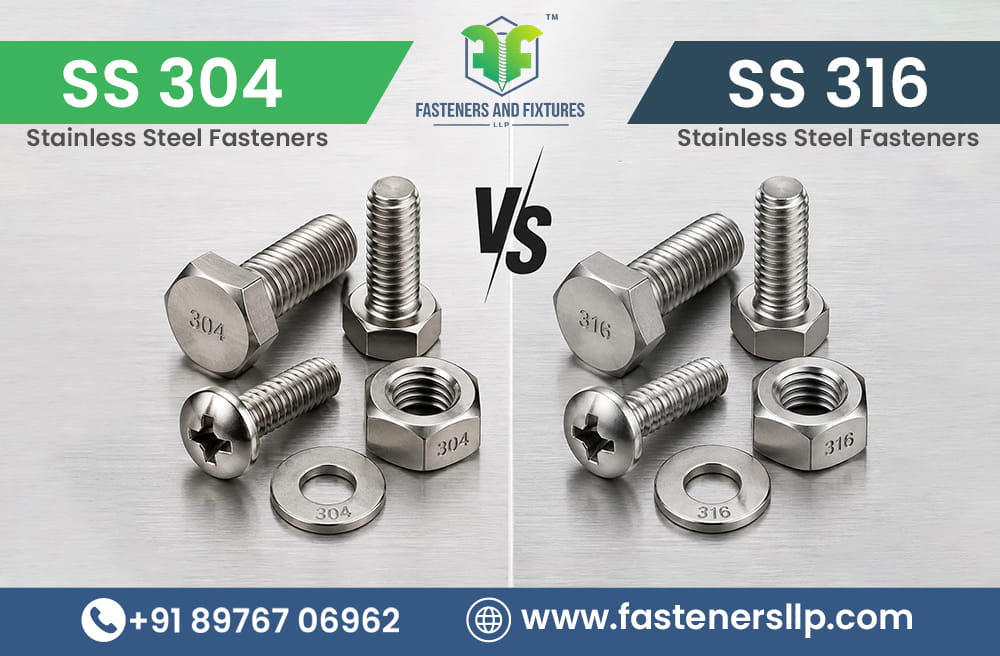
Do you know the Difference Between SS 304 vs SS 316 Stainless Steel Fasteners?

Fasteners made of stainless steel are widely employed in engineering, construction, automotive, marine, food processing, industrial, and architectural applications due to their durability, strength, and resistance. The most frequently used kinds are SS 304 and SS. Although both are part of an austenitic stainless steel class, their composition and properties make them appropriate for various situations.

Understanding the difference between SS 304 and SS 316 is essential when selecting nuts, bolts, washers, screws, and other fastening components that fasten. The correct grade will increase the life of your service, decrease maintenance, and offer better resistance to the most demanding operating conditions.

SS 304 vs SS 316: What Is the Difference?

SS 304 is one of the most popular types of stainless steel. It has good resistance to corrosion, shapeability, strength, and value, making it a good all-purpose stainless steel material for fasteners.

SS 316 provides enhanced corrosion resistance since it is made up of molybdenum. This makes it ideal for areas that have chlorides, saltwater, chemicals, and other conditions that cause corrosion.

In simple words, SS 304 is an excellent choice for general-purpose use, and SS 316 is generally preferred for environments that are more abrasive.

SS 304 vs SS 316 Chemical Composition:

The major difference is apparent when you compare SS 304 and SS 316 chemical composition.

SS 304 primarily contains iron along with nickel and chromium, with chromium providing resistance to corrosion and nickel enhancing its austenitic structure and strength.

SS 316 contains chromium and nickel too; however, it also has around 2 percent molybdenum. This extra element greatly enhances the resistance to pitting as well as crevice corrosion, specifically in chloride-rich environments.

Common compositions include:

Element SS 304 SS 316
Chromium ~18-20% ~16-18%
Nickel ~8-10.5% ~10-14%
Molybdenum Not deliberately included ~2-3%
Iron Balance Balance

Limits can be different in accordance with the applicable standard and the product’s specifications. So, it is important to examine the certification of the material as well as relevant grade specifications for critical applications.

Stainless Steel 304 vs 316 Strength:

When it comes to comparing Stainless Steel 304 vs 316 strength, the differences are not always that dramatic. Both grades provide high mechanical properties, durability, and resistance to a variety of conditions of use.

SS 304 is widely used in situations where strength and corrosion resistance are required, but without exposure to extremely aggressive conditions. SS 316 can provide comparable mechanical performance, while also offering greater resistance to corrosion.

For fasteners, however, strength is not the only selection factor. Thread design, the class of the fastener manufacturing procedure, heat treatment where necessary, dimensions, and load conditions can all impact the performance.

Therefore, deciding between SS 304 and SS 316 shouldn’t be solely based on strength. The environment around you is usually the most important factor.

Types of Stainless Steel Fasteners:

Fasteners come in a variety of designs to meet various requirements for joining. Some of the popular Types of Stainless Steel Fasteners available in the market are given below:

  • Stainless Steel Bolts: They are used for mechanical and structural assemblies.
  • Stainless Steel Nuts: They are paired with bolts to ensure strong threaded connections.
  • Stainless Steel Screws: They are suitable for machine fabrication, equipment, or general assembly.
  • Stainless Steel Washers: Help distribute loads and protect surfaces adjacent to them.
  • Threaded rods and studs are used for pipe, equipment, or industrial components.
  • Self-Tapping Screws: They are useful when the fastener is able to create or engage threads in the course of installation.

The right grade of fastener should be chosen based on the purpose, the environment, loads, and the relevant standards.

SS 316 vs SS 304: Which One Should You Choose?

The answer is contingent on the specific application.

Select SS304 for the following reasons:

  • General resistance to corrosion
  • Affordable stainless steel fasteners made from stainless steel
  • Applications for moderately corrosive or indoor environments
  • Applications for construction and fabrication
  • Kitchen-related and food-processing environments
  • General assembly of machinery and equipment

Select SS316 to get:

  • Greater resistance to exposure to chlorides
  • Superior performance in the marine environment
  • Better resistance to crevice and pitting corrosion
  • Chemical processing applications
  • Coastal construction
  • Outdoor applications exposed to harsh weather conditions

SS 316 generally costs more than SS 304 because of its alloying composition. However, the extra corrosion resistance could justify the expense, especially in situations where the failure of a fastener prematurely may result in maintenance costs or other operational issues.

Stainless Steel 304 vs 316 for Water Bottle:

The contrast between stainless steel 304 and the 316 used to be used in water bottle applications is also standard. SS 304 is extensively used for beverage and food containers as it has good anti-corrosion properties and it is suitable for a variety of common applications.

SS 316 can offer additional corrosion resistance, particularly if exposure to salts or other aggressive liquids are a problem. However, for normal drinking-water applications, SS 304 is often sufficient if it is well-constructed and maintained.

The same principles apply to fasteners. The best quality is determined by actual conditions of use rather than simply selecting the more costly material.

Stainless Steel 304 vs 316 for Jewelry:

The expression stainless steel304 and 316 for jewelry generally refers to the appearance as well as durability, skin-contact issues, and corrosion resistance.

Both grades provide the durability of stainless steel surfaces; however, SS 316 and its variants are typically chosen for use that requires greater resistance to corrosion. Jewellery exposed to moisture, sweat and environmental pollutants can benefit from an alloy that is resistant to corrosion.

For other skin-contact products, purchasers should be aware of the specific specifications for the product as well as the finish of the surface and any applicable safety standards rather than deciding on an item based solely on the basis of its name.

Uses of SS 304 and SS 316 Fasteners:

SS 304 fasteners are commonly employed in machines, architectural fabrication, food processing equipment, automotive components, furniture, general engineering, and other areas.

SS 316 fasteners are particularly suitable for marine structures, marine equipment, chemical processing facilities, pharmaceutical plants, water-treatment equipment, outdoor structures and installations which are exposed to chlorides.

A proper selection of materials can help to avoid corrosion-related issues such as pitting, staining, thread loss, and the rapid loss of integrity in fastening.

Why Choose Fastnersllp?

Choosing the right supplier of fasteners is as important as choosing the correct grades of stainless steel. Fastnersllp could be a viable option for a business seeking stainless steel fastening options based on requirements for the application, dimensions, grades, and specifications.

A reputable supplier must be able to aid customers in finding the appropriate fastener type, materials, grades, sizes, and finishes, as well as appropriate standards. For industrial applications that require a lot of effort, documents like the certification of material and specifications compliance are also important.

If the need is SS 304 or SS 316, buyers should concentrate on the same quality, precision in dimensional measurement, the right material selection, and reliable supply.

The decision of SS 304 and SS 316 stainless steel fasteners will ultimately depend on the operational environment. SS 304 is an excellent stainless steel that is general-purpose and offers the best balance between corrosion resistance, durability, and cost. SS 316, with its molybdenum percentage, is more suitable for applications involving marine conditions, chlorides, and more corrosive environments that are more severe.

Understanding SS 316 vs SS 304 and their chemical structure, strength types, and applications will help engineers, manufacturers, as well as procurement departments, make more informed selections. By assessing the conditions and loading requirements, as well as the specifications and the expected life of service, it is possible to select the correct stainless steel fastener to suit your specific application.

1. What is the primary distinction that separates SS 304 and SS 316 fasteners?

The main difference is the chemical composition. SS 316 contains molybdenum, which gives it better resistance to crevice and pitting corrosion, particularly in chloride-rich environments. SS 304 is generally preferred in a wide range of applications due to the fact that it provides excellent corrosion resistance and a cost that is a bit lower.

2. Are SS 316 stronger than SS 304?
SS 316 and SS 304 have mechanical properties that are broadly similar; however, their strength is contingent on the condition and the specifications. For fasteners, the necessary grade, standard, and application load should be taken into consideration instead of thinking it is the case that SS 316 is always stronger.

3. Which one is better for marine and outdoor bolts, SS 304 or SS 316?
SS 316 is generally the most preferred option for chloride-sensitive marine and high-chloride environments because of its molybdenum content. offers increased resistance to crevice and pitting corrosion.

4. Are SS 304 suitable for water bottles or food-related uses?
Yes. SS 304 is widely used in the food and beverage industry due to its resistance to corrosion and its suitability for a variety of everyday conditions. However, the product must meet the applicable requirements for food contact.

5. What are the differences between SS 304 and SS 316 stainless steel fasteners?
Take into consideration the environment that you are in, such as exposure to chlorides or chemicals, temperatures, and mechanical loads, the required service life, applicable, standards and budget. For general use, SS 304 is often acceptable, while SS 316 is generally advantageous for more corrosive environments. Fasteners LLP is a resource for buyers to determine the right type of fastener and specification of the material for their needs.
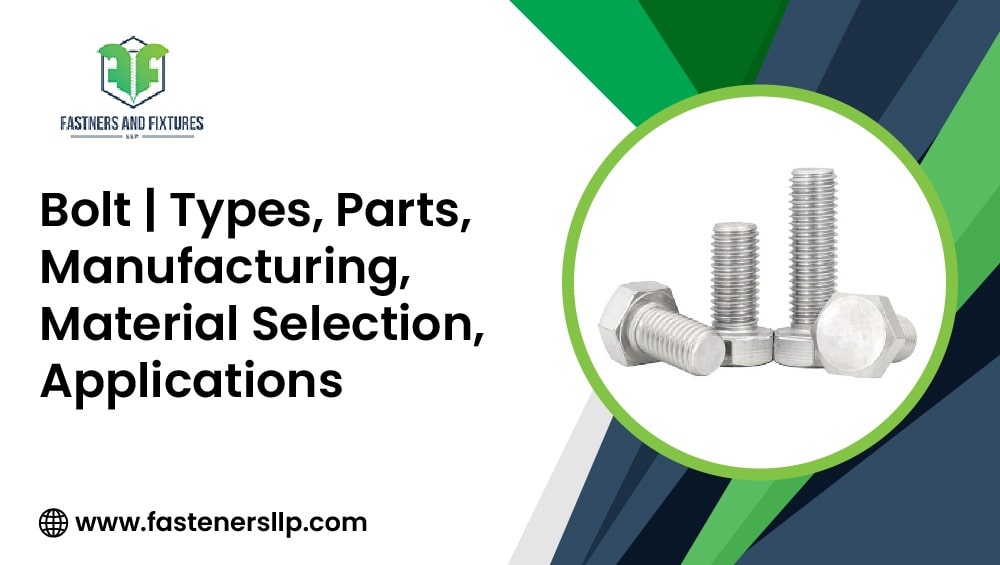
Bolt | Types, Parts, Manufacturing, Material Selection, Applications

Bolts are important fasteners used throughout genuinely every industry, from the automobile to the aerospace industry. They are designed to sign up for or more factors together securely, frequently through using a nut. Whether you’re jogging on a complex mechanical assembly or a smooth home repair, expertise in the distinct kinds of bolts, their components, material selection, and applications can assist in ensuring the proper desire for the interest. In this blog, we will dive into the arena of bolts, imparting insights into their types, production methods, materials, and applications. If you’re searching for a dependable bolt producer or bolt fastener supplier such as Fasteners & Fixtures, this manual will be helpful.

What is a Bolt?

A bolt is a kind of mechanical fastener used to preserve items or substances collectively. It consists of a threaded shaft with a head, usually used together with a nut to create a steady joint. Unlike screws, bolts commonly require a nut to preserve them in the region. Bolts are regularly applied in applications in which the fastener ought to undergo massive mechanical pressure and offer a high stage of clamping force.

Types of Bolts

There are numerous one-of-a-type forms of bolts, every designed for specific applications. Below are some of the most commonplace sorts:

  • Hex Bolts: Hex bolts are possibly the most common form of bolt. They have a hexagonal head and are utilized in a huge sort of applications, consisting of creation and automobile. The flat floor of the hex head lets in them to be tightened or loosened with a wrench.
  • Carriage Bolts: Carriage bolts have a rounded head with a square neck beneath. The square neck permits to prevent the bolt from turning even as it’s far being tightened, making it great for wood structures, furnishings, and metallic connections.
  • Lag Bolts: Lag bolts are massive, heavy-responsibility bolts often utilized in woodworking and production. These bolts characteristic a thick, coarse thread and are designed to stable heavy gadgets or parts to wooden.
  • Anchor Bolts: Anchor bolts are used to steady structures to concrete. These bolts are embedded into concrete foundations and are important for containing properties, equipment, and different device in place.
  • Shoulder Bolts: Shoulder bolts are used in applications in which a completely unique, smooth surface is needed for rotational movement. They are regularly utilized in equipment, car additives, and as pivots for transferring elements.
  • U-Bolts: U-bolts have a U-form and are often used to steady pipes or rods to structures. They are normally located in plumbing and mechanical applications.

Parts of a Bolt

A common bolt is made from several key components that ensure its function and reliability:

  • Head: The head of the bolt gives a floor for equipment to grip and practice torque. The head may be hexagonal, rectangular, spherical, or different shapes depending on the sort of bolt.
  • Shank: The lengthy, cylindrical part of the bolt. The shank can be completely or in part threaded.
  • Thread: The helical ridge that wraps around the shank of the bolt. The threads are designed to interact with the nut or the tapped hole within the element being fixed.
  • Neck: The segment just under the pinnacle of the bolt. In some bolts, the neck is specially formed (as in carriage bolts) to save you the bolt from rotating.
  • Point: The stop of the bolt, which may be flat, pointed, or blunt, relying on the applications.

Manufacturing of Bolts

Bolts are usually synthetic using a procedure known as cold heading, in which metallic cord is heated and formed into the shape of a bolt. As we are a leading bolt manufacturer our production systems include numerous processes:

  • Wire Drawing: The steel is drawn into cord of the preferred duration.
  • Cold Heading: The wire is fed into a machine that makes use of dies to form the bolt’s head and frame.
  • Thread Rolling: Once the primary bolt form is shaped, the threads are rolled onto the shank the use of specialized dies.
  • Heat Treatment: Heat remedy strategies along with quenching and tempering are used to decorate the strength and hardness of the bolt.
  • Finishing: The bolts are wiped easy, covered (e.g., galvanized, zinc plating), and occasionally polished to satisfy unique necessities for corrosion resistance and appearance.

Material Selection for Bolts

Selecting the proper material for bolts is important to making sure they perform properly in their meant application. Common substances include:

  • Carbon Steel: Often used for popular-cause bolts, carbon metallic offers an awesome balance of energy, hardness, and fee.
  • Stainless Steel: Stainless metallic bolts are notably proof against corrosion and are perfect for marine, meals processing, and chemical environments.
  • Alloy Steel: For heavy-duty applications, alloy steel bolts offer advanced electricity and overall performance at high temperatures.
  • Titanium: Known for its excessive electricity-to-weight ratio and corrosion resistance, titanium bolts are generally utilized in aerospace and clinical devices.
  • Brass and Bronze: For applications wherein corrosion resistance is crucial but power is less of a project, brass or bronze bolts can be used.

The choice of material will depend upon factors which incorporates the jogging surroundings (e.g., exposure to moisture, chemical substances, or high temperatures), energy requirements, and price issues.

Applications of Bolts

Bolts are utilized in a widespread variety of applications across many industries. Some key regions embody:

  • Construction: Bolts are crucial for securing beams, columns, and exceptional structural components in buildings and bridges.
  • Automotive: Bolts preserve collectively vital components like engines, suspension systems, and frames in vehicles.
  • Aerospace: In aerospace, bolts need to resist excessive situations, such as high temperatures and pressures. Bolts are utilized in engine assemblies, aircraft frames, and touchdown gear.
  • Marine: In the marine enterprise, bolts are used to gather deliver hulls, turbines, and different tool this is uncovered to harsh saltwater environments.
  • Heavy Machinery: Bolts are important for the assembly of commercial enterprise equipment, turbines, and other heavy-demand gadget.

Why Choose Fasteners & Fixtures?

As a trusted bolt manufacturer and bolt fastener supplier, we offer a massive kind of brilliant bolts to fulfill the desires of diverse industries. Whether you are seeking out custom bolt answers or trendy fasteners, we offer products that supply reliability, durability, and overall performance in demanding applications. Our bolts are manufactured to the very high-quality standards, ensuring they meet the stringent first-rate requirements of industries like construction, vehicle, aerospace, and further.

In conclusion, knowledge the different types, elements, and programs of bolts is important for deciding on the right fastener on your challenge. With the right bolt, you could ensure the protection, integrity, and longevity of your assembly. Contact Fasteners & Fixtures nowadays to speak approximately your bolt wishes and find out how our splendid products assist you to entire your subsequent venture correctly.

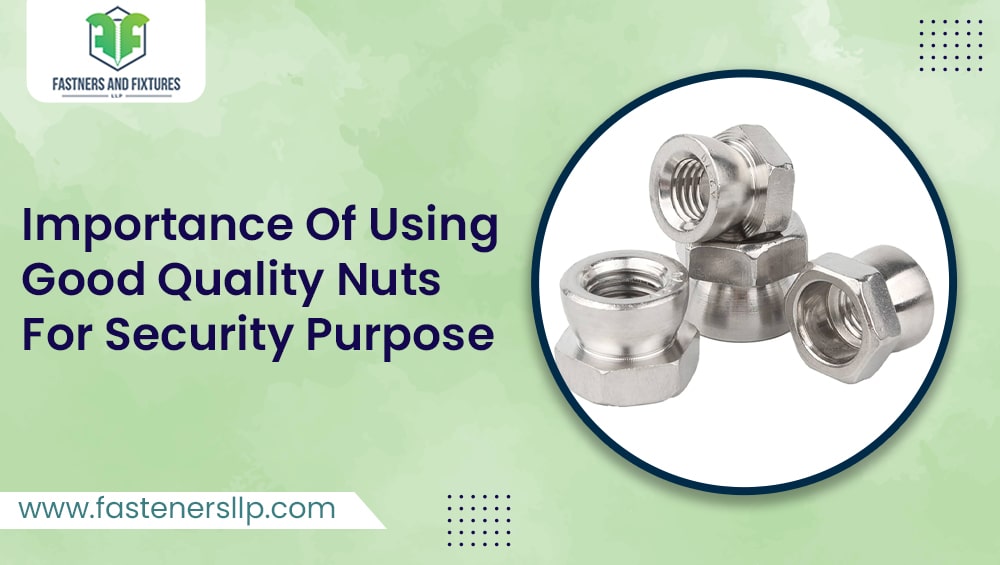
The Importance of Using Good Quality Nuts for Security Purposes

In the world of engineering and manufacturing, the reliability and protection of structures hinge on countless small components. Among the ones, nuts play an important feature, mainly in securing bolts and ensuring the integrity of assemblies. When it comes to protection and safety, the importance of using proper quality nuts cannot be overstated.

In this blog, we are capable of discovering why investing in tremendous nuts is crucial for both safety and efficiency, highlighting the function of valid nuts manufacturers and vendors like Fasteners & Fixtures.

Understanding Nuts and Their Function

Nuts are fasteners with a hexagonal shape that commonly pair with bolts. They are designed to be tightened onto a bolt to regular components collectively, growing a robust meeting. The interaction of some of the bolts and nuts is essential; if one detail fails, the complete assembly can be compromised. Therefore, the quality of the nuts used is paramount.

The Risks of Low-Quality Nuts

Material Composition: Low-quality nuts are often crafted from inferior materials that can corrode or fail in pressure. This is especially risky in areas with issues with extreme temperatures or corrosion-causing substances. A nut that cannot face up to environmental pressures will compromise the whole assembly.

Thread Integrity: The threads of a nut need to be unique to ensure a cushy shape on a bolt. Furthermore, improperly manufactured nuts may have fractured or misaligned threads, which would result in insufficient clamping force and eventual failure. This can bring about catastrophic effects, specifically in important applications together with aerospace or manufacturing.

Inconsistent Performance: Variations in the quality of nuts can lead to erratic collective outcomes. Using inferior nuts may cause variability that affects the entire operation when handling machinery or systems that need to be operated with precise tolerances.

Safety Hazards: The consequences of using low-quality nuts are severe. In industries in conjunction with automobile, aviation, and civil engineering, the failure of fasteners can result in injuries, tool damage, and even lack of existence. The price of failure far outweighs the preliminary economic monetary savings from using cheaper components.

Benefits of High-Quality Nuts

Enhanced Durability: High-first-rate nuts are crafted from superior substances, alongside side stainless steel or excessive-durable alloys, providing resistance to corrosion, wear, and fatigue. Because of its longevity, there is less need for frequent replacements.

Reliable Performance: Trusted nut manufacturers put money into precision engineering and quality control. In this manner each nut is produced to fulfill strict requirements, providing dependable performance in plenty of applications. When nuts are reliable, the overall performance of the assembly improves.

Safety Assurance: Engineers and technicians may feel secure about the quality of their assemblies when they use remarkable nuts. This guarantee is essential in high-stakes environments wherein safety is paramount. Companies that prioritize quality face low costs of failure and recall incidents, leading to cost savings and improving their recognition.

Cost-Effectiveness: Excellent nuts often turn out to be more affordable in the end, even though they may also entail a greater upfront cost. Their durability and efficiency reduce maintenance requirements and minimizes the chance of failure, leads to large monetary savings on restoration and replacements.

Choosing the Right Nuts Supplier

Selecting the right nuts supplier is as crucial as selecting the nuts themselves. A respectable provider will offer products that meet business standards and recommendations. Here are some recommendations for choosing a notable nuts supplier:

  • Certification and Standards: Look for providers who adhere to enterprise certifications together with ISO 9001 or ASTM necessities. These certifications advise a dedication to excellence and consistency.
  • Product Range: A correct company need to offer a wide type of nuts appropriate for exclusive applications. Whether you need elegant hex nuts, lock nuts, or specialized fasteners, having alternatives can be useful.
  • Customer Support: Reliable corporations offer exceptional customer service, assisting you in deciding on the proper products for your goals. They should allow you to respond to technical queries and provide guidance on the best configuration and security.
  • Reputation: Search suppliers’ reputations through reviews and testimonials. A supplier like Fasteners & Fixtures, identified for its dedication to excellence and corporation, may be a first-rate asset on your project.

Conclusion

In summary, the significance of the usage of true incredible nuts in any assembly can’t be overstated. These small components are essential for securing components and ensuring the overall integrity of systems and gadget. Low-quality nuts create massive risks, collectively with structural failure and safety risks, making the selection of dealers crucial.

Investing in brilliant nuts from a good nuts manufacturer and organization like Fasteners & Fixtures not only enhances the safety and sturdiness of your demands but also gives you peace of mind. By prioritizing quality, you can ensure the reliability of your assemblies and contribute to a safer work environment. “It’s the little things that matter,” as the saying goes, is especially true when it comes to nuts.