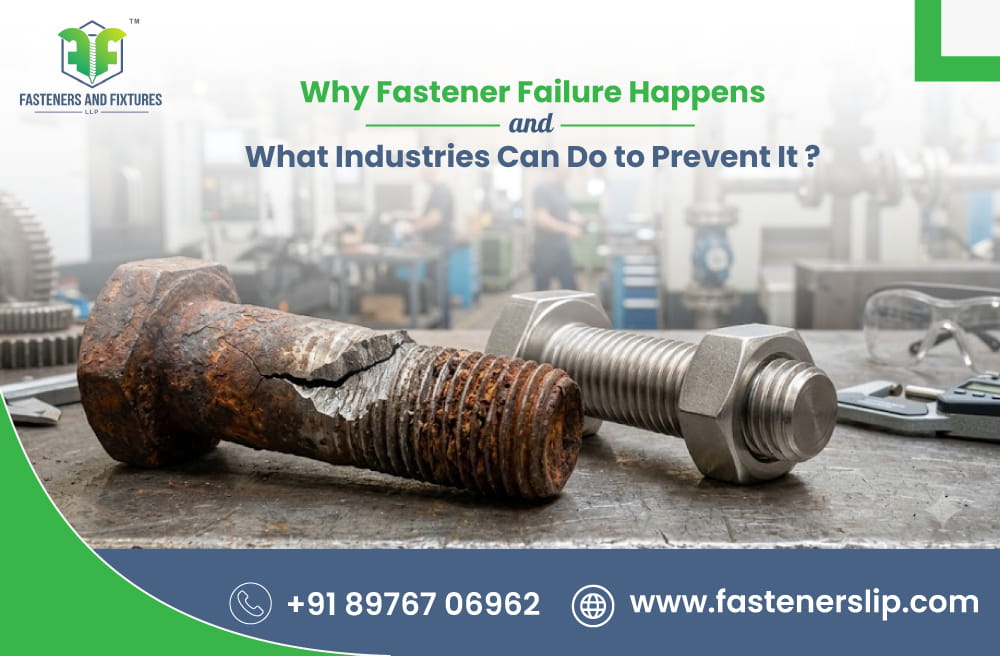
Why Fastener Failure Happens and What Industries Can Do to Prevent It?
They are one of the crucial elements of engineering for industrial use, but they are frequently overlooked until there is a problem. From oil refineries and bridges to heavy machinery, automobiles, and even cars, industrial fasteners Supplier are essential in securing structures and equipment to each other. When a bolt or screw is damaged, the results can vary from production interruption to catastrophic damage to equipment as well as security risks.
Knowing the causes of fastener failure is crucial for companies in the construction industry, manufacturing as well as energy facilities and maintenance teams looking to improve reliability of operations and cut down on maintenance expenses.
In this guide we at Fasteners LLP outline the most common reasons behind failures of fasteners as well as the preventive measures that industries can take to ensure lasting performance.
What Is Fastener Failure?
Failure of a fastener is the failure for a bolt to perform its intended purpose due to wear, damage or improper installation. It could also be due to environmental conditions. Failure isn’t always the bolt is broken, but it could mean the loosening of bolts, corrosion, fatigue cracks, stripped threads or the loss of the force of clamping.
A single failure of a fastener could compromise the strength of the entire assembly.
Common Causes of Fastener Failure
1. Incorrect Material Selection
One of the main reasons for the failure of a fastener is selecting the incorrect material for the job. Fasteners that are exposed to corrosive saltwater, extreme temperatures require special materials such as stainless steel Duplex stainless steel and Inconel Monel or Hastelloy.
Using carbon steel fasteners for marine environments, for example, could lead to an immediate corrosion process and premature loss of performance.
2. Improper Torque During Installation
The application of too much or not enough torque can significantly impact the performance of fasteners.
- Insufficient tightening of the fastener pushes it to the point of no return.
- Under-tightening reduces clamping force, allowing vibration-induced loosening.
Using torque tools that are calibrated and adhering to manufacturer specifications help to ensure proper preload.
3. Corrosion
Corrosion can weaken the cross-section of the fastener and decrease load-bearing capacity.
Common types include:
- Uniform corrosion
- Galvanic corrosion
- Crevice corrosion
- Pitting corrosion
- Cracks in stress corrosion
Choose the corrosion resistant Industrial fasteners and coatings with protective coatings dramatically extends their service life.
4. Fatigue Failure
Fasteners that are subjected to frequent loading and unloading eventually form microscopic cracks.
Over time, the cracks grow until a sudden rupture takes place.
Industries that are affected include:
- Automotive
- Aerospace
- Railways
- Wind Energy
- Heavy Equipment Manufacturing
Proper preload and selecting high-fatigue-strength fasteners minimize fatigue-related failures.
5. Vibration and Dynamic Loads
Machines that operate under constant vibration slowly reduce tension on threaded fasteners.
Examples include:
- Compressors
- Pumps
- Mining Equipment
- Construction Machinery
- Industrial Motors
Lock washers, torque nuts, thread-locking substances and correct tightening techniques aid in preventing loosening.
6. Hydrogen Embrittlement
High-strength steel fasteners may absorb hydrogen during electroplating or acid cleaning.
This leads to internal brittleness and unintentional fractures under normal loads.
Utilizing controlled manufacturing processes as well as the appropriate heating treatment minimizes the chance.
7. Thread Damage
Threads damaged or poorly constructed decrease the distribution of load.
Thread stripping can be attributed to:
- Cross-threading
- Dirt contamination
- Poor machining
- Incorrect tightening
Make sure to inspect threads prior to installation.
8. Overloading
Each fastener is rated according to shear and tensile strength.
Utilizing too large fasteners or exposing them to loads that exceed their capacity causes permanent fracture or deformation.
Engineering calculations should always help determine the correct size and the appropriate grade.
Industries Most Affected by Fastener Failure
Oil & Gas
High pressure, corrosive chemicals and offshore environments call for the highest-quality industrial fasteners.
Construction
Structural bolts are used to ensure the stability of bridges, structures and other infrastructure.
Power Generation
Power plants require fasteners that are reliable and capable of handling temperatures up to a high temperature as well as thermal cycles.
Chemical Processing
Chemical plants rely on corrosion-resistant fasteners that can resist the abrasive media.
Marine Industry
The corrosion caused by saltwater makes stainless steel as well as duplex fasteners indispensable.
Automotive Manufacturing
Fasteners are subject to constant stress, vibrations and fluctuating temperatures.
Aerospace
Aircraft require precision-engineered fasteners that have outstanding strength-to-weight ratios as well as fatigue resistance.
Warning Signs of Fastener Failure
Early detection can save you from costly repairs.
Keep an eye out for:
- Rust formation
- Loose bolts
- Cracked washers
- Thread damage
- Visible deformation
- Preload not loaded
- Unusual vibrating
- Noise during operation
- Leaking flange joints
- Surface pitting
Regular inspections can significantly prevent the chance of unexpected failures.
How Industries Can Prevent Fastener Failure
Choose the Right Material
Pick fasteners according to:
- Operating temperature
- Corrosion exposure
- Mechanical load
- Pressure needs
- Chemical compatibility
Partnering with reputable fastener suppliers will ensure that you get the right material.
Use Correct Torque Values
Use the recommended torque specifications.
Employ:
- Torque wrenches
- Hydraulic tensioners
- Digital torque monitoring systems
Consistent tightening improves joint reliability.
Perform Regular Inspection
Maintenance teams should examine fasteners before scheduled shut downs.
The methods of inspection are:
- Visual inspection
- Ultrasonic testing
- Inspection of magnetic particles
- Dye penetrant testing
Predictive maintenance is a way to identify potential issues before they become a problem.
Apply Protective Coatings
Protective finishes enhance corrosion resistance.
Common coatings are:
- Zinc Plating
- Hot Dip Galvanizing
- PTFE Coating
- Xylan Coating
- Cadmium Coating (where allowed)
The selection of coatings is contingent on the operating conditions.
Prevent Vibration Loosening
Consider:
- Lock nuts
- Belleville washers
- Nord-Lock washers
- Thread-locking adhesives
- Double-nut systems
These solutions enhance joint security in vibrating equipment.
Purchase High-Quality Industrial Fasteners
Always buy from reliable manufacturers that meet international standards like:
- ASTM
- DIN
- ISO
- ASME
- BS Standards
Accredited Industrial fasteners ensure the same mechanical performance and the ability to track.
Train Installation Personnel
Even the most expensive fasteners can fail if they are installed incorrectly.
Proper technician training reduces:
- Cross-threading
- Over-tightening
- Under-tightening
- Incorrect Lubrication
- Improper alignment
Why Quality Fasteners Matter
Industrial downtime can cost thousands — or even millions of rupees per hour, based on the sector. Making investments in top industry-grade fasteners lowers the cost of maintenance and increases safety in the workplace. It also increases the reliability of equipment and increases the lifespan of equipment.
When you’re building industrial plants or manufacturing heavy equipment or sustaining processes, choosing the correct fastener is a way to invest in the quality of your operations.
Why Choose Fasteners LLP?
Fasteners LLP provides top-quality industrial fasteners specifically designed for the most demanding industrial applications that span oil and gas construction, marine, energy generation and chemical processing manufacturing, and automotive. Through strict control of quality, standards-based international conformance and a broad range of fastening options, Contact Fastners LLP helps businesses to minimize failure of fasteners and maximize the durability, performance and security.
FAQ
1. What is the most frequent reason for failure of a fastener?
The main reason for failure of fasteners is poor installation, specifically improper torque. Over-tightening or under-tightening will dramatically reduce the life of a fastener and weaken joint integrity.
2. What are the best industrial fasteners to avoid the failure of equipment?
The highest-grade Industrial fasteners ensure a solid clamping force, withstand corrosion, withstand vibration and ensure structural stability, decreasing the possibility of unexpected breakdowns in equipment.
3. Which industries are most dependent heavily on the use of industrial screws?
Industries like construction, oil and gas marine, automotive power generation, aerospace mining, chemical processing rely heavily on strong industry fasteners to ensure safety and efficiency in processes.
4. How do I select the most appropriate industrial fasteners?
Select industrial screws according to the compatibility of the material strength of load as well as corrosion resistance and operating temperature as well as pressure requirements, as well as compliance to ASTM, DIN, ISO as well as ASME standards.
5. Why should fasteners be inspected by industries often?
Routine inspections are a great way to detect the presence of corrosion, loosening, cracks, thread damage and thread cracks early to avoid expensive breakage of the fastener and enhancing safety and prolonging the life of equipment.